History@Portsmouth

University of Portsmouth's History Blog

Author Archive | Fiona McCall

Martin_Guerre cropped

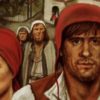
Martin Guerre: a student podcast on Natalie Davis’s famous microhistory

Seminar tutor Dr Katy Gibbons explains: Mandy and Beth’s podcast came out of the level 5 core module, Dealing with Debates. One strand of this module explores Natalie Davis’ book, The Return of Martin Guerre, and the questions and possibilities it raises for historical scholarship. We had some fantastic discussions online, including: how historians analyse and make use of primary evidence, the role of imagination in historical writing, and how the tale of a 16th century peasant who pretended to be someone else can help us reflect on what it is that historians do! Mandy and Beth’s podcast did a brilliant job of exploring some of these issues, weaving them […]

Continue Reading 0
1024px-Katherine_johnson_john_glenn cropped

International Women’s Day 2021: Katherine Johnson: Mathematician at NASA

To celebrate International Women’s Day, we are delighted that UoP history graduate Ian Atkins has written this profile of pioneering NASA mathematician Katherine Johnson. For International Women’s Day I have chosen to write about Katherine Johnson, NASA mathematician, most famous for her work in calculation of the trajectory for manned space orbits, and subsequent lunar expeditions.[1] Johnson was born in White Sulphur Springs, West Virginia on the 26th August 1918. She was the youngest of four children, her mother a teacher and her father an all-purpose odd job man.[2] Katherine had always excelled at maths and was ahead of her class from an early age. Margot Lee Shetterly indicates that […]

Continue Reading 0
Portsmouthbanner cropped

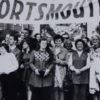
The hidden heritage of a naval town: women’s community activism in Portsmouth since 1960

As a naval town, Portsmouth’s history has tended to have a masculine focus.  But many Portsmouth women have actively campaigned for women’s rights and set up practical initiatives in the Portsmouth area to improve the lives of women. A Heritage Lottery Fund grant enabled the setting up of a project to interview these women and capture their stories.  UoP history reader Sue Bruley was one of the project leaders.  Project co-lead Laurel Forster, Reader in Cultural history in the UoP School of Film, Media & Communication explains more about the project and its outcomes. The main aim of this project was to document the activism of  women in the Portsmouth […]

Continue Reading 0
Civil War soldiers cropped

The Impact of Civil War on English Parishes

In November 2020 the University of Warwick Network for Parish Research organised an online symposium on ‘Remembering the Parish’. Fiona McCall, Senior Lecturer in History at the University of Portsmouth, presented a paper, ‘Remembering the ‘Wickedly Wicked’ Times’, looking at loyalist memories criticising the interregnum religious regime.  She was one of four speakers on the memories of the civil war in English parishes; there is a feature on these papers here on the My-Parish website.

Continue Reading 0
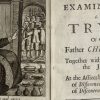
Josiah King, The Examination and Tryall of Old Father Christmas

Have yourself a puritan Christmas

Dr Fiona McCall is a lecturer in early modern history, teaching units on the British Civil Wars, and Crime, Sin and Punishment in early modern Britain, amongst others. Her current research project investigates traditionalist resistance to puritan values in English parish churches during the 1640s and 1650s, and in this blog she discusses how Christmas was banned during this period. Christmas was officially banned during the late 1640s and 1650s along with the rest of the church calendar.  But the interdict was widely ignored.  Trawling through various counties’ quarter sessions depositions for the period, I have found frequent references to Christmas, Easter, Whitsun, and various saints days, the witnesses (even those testifying […]

Continue Reading 0
West-indian-ATS cropped

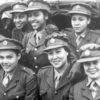
Winston Churchill’s thoughts on women’s work

In this blog, written last year for the second-year Introduction to Historical Research module, second-year UoP student Jaina Hunt wrote about how minutes of government discussions reveal changing attitudes to women’s war work. During the twentieth century, minutes were created and absorbed by the system of government, making them an important part of the political machinery of Britain.[1] The minutes of the Prime Minister Winston Churchill to his secretary of state for war show the importance of women’s war effort in changing attitudes towards women. Churchill placed great emphasis on the “immense importance of having a large number of women” in crucial wartime roles, such as positions in batteries and […]

Continue Reading 0