History@Portsmouth

University of Portsmouth's History Blog

Tag Archives | twentieth century

BOSTON, MA - APRIL 21: Chanting, "We're going to stop rape now," a coalition of women's groups gathered in Downtown Crossing in Boston on April 21, 1984, to protest the treatment of the victim in the highly publicized New Bedford barroom rape trial. The demonstration came one month after four men were convicted of raping a 21-year-old mother on a pool table in Big Dan's tavern in New Bedford. The case drew nationwide publicity when police reported that others in the bar cheered during the attack. The trial was broadcast daily on cable television. (Photo by Wendy Maeda/The Boston Globe via Getty Images)

A Heritage Lottery Fund Grant for the University of Portsmouth for an Oral History Project on Women’s Activism Since 1960

Dr Sue Bruley, Reader in Modern History at Portsmouth, has won a large grant from the Heritage Lottery Fund to research women’s activism in Portsmouth since 1960. The project will investigate the many struggles women faced living and working in the naval city. Sue’s research focuses on gender and women’s history in the 20th century, and she teaches a special subject on ‘Gender, Sexuality and War 1922-80’ and an option ‘The First World War, A Social and Gender History’. The University of Portsmouth has been awarded a Heritage Lottery Fund grant of £73,300 to research women’s activism in Portsmouth. This project will led by Sue Bruley, Reader in Modern History, […]


Continue Reading 0
1280px-Memorial_to_the_Murdered_Jews_of_Europe_(566295389)

Heritage and Memory: Memorial to the Murdered Jews of Europe

Aimee Campbell, a second year History student at the University of Portsmouth, wrote the following blog entry on the Memorial to the Murdered Jews of Europe for the Introduction to Historical Research Unit. Aimee discusses the process in which memorials gain meaning and serve as sites where past atrocities can be commemorated. The unit is co-ordinated by Dr Maria Cannon, Lecturer in Early Modern History at Portsmouth.  Heritage presents the past through a memorialised fashion; compromising of tangible memorials, rituals and ceremony. Heritage and memory can be political in certain historical contexts and conditions. [1] In this blog I shall explore whether the Memorial to the Murdered Jews of Europe in […]

Continue Reading 0
Russian_revolutionary_plate_designed_by_Mikhail_Adamovich

Using Material Culture: The Russian Revolutionary Plate

Cameron Meeten, a second year History student at the University of Portsmouth, wrote the following blog entry on a plate produced in revolutionary Russia for the Introduction to Historical Research Unit. Cameron demonstrates how the plate gives us an insight into the ways in which the Soviets tried to steer and influence ideological thinking in the Soviet Union. The unit is co-ordinated by Dr Maria Cannon, Lecturer in Early Modern History at Portsmouth.  Material culture is the use of objects created or modified by people which directly or indirectly reflect the ideology of those involved with their creation, as well as the beliefs of the society in which they were created. […]

Continue Reading 0

Using Visual Sources: “Ein Volk, ein Reich, ein Führer!”

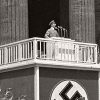
Nia Picton-Phillips, a second year History student at the University of Portsmouth, wrote the following blog entry on a Nazi propaganda poster featuring Adolf Hitler for the Introduction to Historical Research Unit. Nia discusses the ways in which the image was used to promote various aspects of Nazi ideology. The unit is co-ordinated by Dr Maria Cannon, Lecturer in Early Modern History at Portsmouth.  The use of visual sources as a means of understanding the past has transformed historical knowledge. The ‘pictorial turn,’ as suggested by W. J. T. Mitchell, was “declared a new cultural phenomenon: a transition from a culture dominated by the book to one dominated by images.” [1] […]

Continue Reading 0
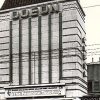
Odeon cinema, North End

‘Make your public curious’: The highs and lows of being a cinema manager

In this blog Dr Rob James, Senior Lecturer in History, discusses the challenges of being a cinema manager in Britain in the first half of the 20th century. Rob specialises in researching society’s leisure activities and teaches a number of units on film and the cinema, including, as part of the Problems and Perspectives unit, ‘History at the Movies’ in the first year, ‘The Way to the Stars: Film and cinema-going in Britain, c. 1900-c. 2000’ option in the second year, and a Special Subject on ‘Cinema-going in Wartime Britain, 1939-1945’ in the third year. Going to the cinema is the result of a series of choices. A number of […]

Continue Reading 0
The_Royal_Navy_during_the_Second_World_War_A23246

‘Read for Victory’: Public Libraries and Book Reading in a British Naval Port City during the Second World War

Dr Robert James, Senior Lecturer in History, has recently published an article in the journal Cultural and Social History on the role of public libraries in the naval town of Portsmouth, UK during the Second World War. See below for the abstract, and if you want to read the article, click here. Abstract: In 1942 a library official in Portsmouth, UK appealed to the city’s inhabitants to ‘read for victory’, believing that they had a duty to use their reading time productively as part of their wartime activities. This article argues that long-standing desires among the country’s political and civic elites to encourage the nation’s readers to spend their leisure time prudently intensified […]

Continue Reading 0