Elliott Thomas’s enthusiasm for and seriousness about history was apparent to from the time I first taught him in his first year of studies, and he has contributed several pieces for this blog. For his dissertation he looked at the role of charismatic figures Joseph Chamberlain, Alfred Milner, and the writer John Robert Seeley in pushing ideas of radical, racist imperialism which at the turn of the twentieth century led Britain into a devastating conflict in South Africa. Elliott’s supervisor was Professor Brad Beaven. Elliott’s work has got better and better over the three years he has studied with us and it is great to see Elliott give a shout […]
Tag Archives | imperialism

Reimagining and decolonising higher education
Below Dr Jodi Burkett, UoP senior lecturer in late twentieth-century history, imperial history and race, writes about a conference she attendance sharing ideas for decolonising the university curriculum. Last week I had the opportunity to attend the Reimagining Higher Education: Journeys of decolonising conference held at the Institute of Education in London (thanks to SASSHPL for funds to support this!). I was attending with my colleague Bhavin Dedhia (Dentistry) to present some work that we have been doing with Lena Grinsted (Biology) to decolonise science teaching and promote inclusive teaching and learning spaces here at Portsmouth. This work is based on research that Lena undertook a few years ago which […]

Polar Exploration and the Imperial Imagination: the social influences that drove arctic explorers to risk all
Most histories of polar exploration focus on the biographies and psychologies of heroic, driven individuals. Matthew Voyce’s UoP BA history dissertation, Polar Exploration and the Imperial Imagination 1845-1922: Race, Science and Competing Approaches, sought to go beyond this to understand the complex ways in which these events connected with the broader social influences and ideas of their time, including imperialism, and the impetus towards scientific advancement. Matthew’s supervisor was Dr Matt Heaslip. Below Matthew writes about his approach to the topic, and his experience of the process of writing the dissertation. Captain Scott’s grave is a lonely place. A solitary cross, hastily nailed together from pine board, watches the endless, […]

Getting creative with early modern history
In a previous post, Dr Katy Gibbons looked at how second-year students studying the Debating the Past module, translated Natalie Davis’s book The Return of Martin Guerre into other media: emojis, memes and poetry. Our first-year students in the Beliefs, Communities and Conflicts: Europe 1400-1750 module are also set an assessment asking them to employ the imaginative use of media to explore a theme relating to their studies on the module. Below we look at two great responses to this. Having initially thought about crocheting an item or artwork from the early modern period (!), Megan Conway decided to produce a comic. Visual formats often make it easier to take in […]

Jewish Historians and the Construction of Regional Identities during the German Empire
Dr Mathias Seiter, Principal Lecturer and Subject Area Lead for History, has recently published an article in the journal German History on the importance of regional identities for Jews in imperial Germany. See below for the abstract, and if you want to read the article, click here. Abstract: The late nineteenth and early twentieth centuries saw a wave of interest in history among Jews in Germany. The popularity of the subject extended to those who lived at the geographic margins of the German Empire, in the Prussian Province of Posen and the Reichsland of Alsace-Lorraine. Living in borderlands in which national identities were contested, Jewish historians established and joined […]
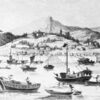
“Officers of the society”: Lloyd’s Register surveyors in China and transnational maritime networks, 1869-1918
On 14 December 2022 University of Portsmouth PhD researcher, Corey Watson, presented at the second joint Naval History/ History research seminar of the year. In the paper Corey, who is in the second year of his doctoral programme, discussed the crucial role that the small group of surveyors who worked for Lloyd’s Register in China played as middle-men in this global maritime system. If you missed the paper, the recording is available to watch here. You will need the following password MLFv8c.z to access the recording. An abstract for Corey’s paper is below. To read more about Corey’s PhD programme, generously funded by the Lloyd’s Register Foundation, see Dr Melanie […]