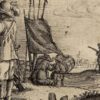
Brad Beaven has a new blog published on the Social History Society’s blog, looking at the history of ‘sailortowns’, seaport’s urban quarters where sailors would stay, eat, drink and be entertained. These were transient and liminal spaces and a unique site of cultural contact and exchange. Despite the rich array of research areas in class, race and gender relations that these districts have to offer, sailortowns have tended to be overlooked in historical study. This is because they sit at the cross-roads between the urban and maritime realms, and have tended to fall between these two schools of history. Brad writes about his new article published for the journal Social […]
Tag Archives | slider
The Impact of Civil War on English Parishes
In November 2020 the University of Warwick Network for Parish Research organised an online symposium on ‘Remembering the Parish’. Fiona McCall, Senior Lecturer in History at the University of Portsmouth, presented a paper, ‘Remembering the ‘Wickedly Wicked’ Times’, looking at loyalist memories criticising the interregnum religious regime. She was one of four speakers on the memories of the civil war in English parishes; there is a feature on these papers here on the My-Parish website.
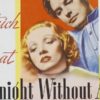
“There are no revolutions in well-governed countries” – British film and the Russian Revolution
In this blog, Rob James explores how the events of the 1917 Russian Revolution impacted British film production in the mid-twentieth century. Rob tells us that the chance of a film being made depicting those tumultuous events depended on how they were presented. If the film demonstrated any sympathy towards the revolutionaries, then a ban was inevitable. Rob’s research covers society’s leisure activities and how they were shaped and controlled from both within and outside the entertainment industry. His research feeds into a number of optional and specialist modules that he teaches in the second and third year. In the 1934 film Princess Charming, produced by Michael Balcon, one of […]
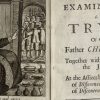
Have yourself a puritan Christmas
Dr Fiona McCall is a lecturer in early modern history, teaching units on the British Civil Wars, and Crime, Sin and Punishment in early modern Britain, amongst others. Her current research project investigates traditionalist resistance to puritan values in English parish churches during the 1640s and 1650s, and in this blog she discusses how Christmas was banned during this period. Christmas was officially banned during the late 1640s and 1650s along with the rest of the church calendar. But the interdict was widely ignored. Trawling through various counties’ quarter sessions depositions for the period, I have found frequent references to Christmas, Easter, Whitsun, and various saints days, the witnesses (even those testifying […]
Have yourself a (not quite so) very merry Christmas film
In this blog, UoP Senior Lecturer Rob James reflects on the changing popularity of the, now well-regarded, festive classic It’s a Wonderful Life. Rob tells us that the film’s success was not predetermined, and that it took a mixture of chance and luck, along with a well-told story of course, for the film to achieve its status as a seasonal favourite. Rob’s research covers society’s leisure activities and this feeds into a number of optional and specialist modules he teaches in the second and third year. In a recent poll featured in The Independent newspaper of the ‘Best Christmas Movies’, the 1946 Hollywood-produced film It’s a Wonderful Life came in […]
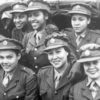
Winston Churchill’s thoughts on women’s work
In this blog, written last year for the second-year Introduction to Historical Research module, second-year UoP student Jaina Hunt wrote about how minutes of government discussions reveal changing attitudes to women’s war work. During the twentieth century, minutes were created and absorbed by the system of government, making them an important part of the political machinery of Britain.[1] The minutes of the Prime Minister Winston Churchill to his secretary of state for war show the importance of women’s war effort in changing attitudes towards women. Churchill placed great emphasis on the “immense importance of having a large number of women” in crucial wartime roles, such as positions in batteries and […]