History@Portsmouth

University of Portsmouth's History Blog

Tag Archives | slider

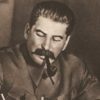
stalin cropped

Sinister Stalin, the Cold-War Octopus

The cartoonist David Low’s depiction of Stalin as an octopus, published in 1948, sits within a long-standing tradition of monstrous, dehumanised depictions of political enemies.  Octopi in particular have been used in the past to represent the sinister ambitions of Prussia, Britain, France, Nazi Germany, America and the oil industry, amongst others.  But as second-year UoP History student Georgia Hutton explains, Low’s octopus critiques both Soviet policy and contemporary Western-bloc attitudes towards it.  Georgia wrote this piece for the second-year module, Danger! Censorship, Power and the People. A cartoon by David Low for the Evening Standard, on 15 April 1948, reveals a great deal about the British, contemporary Western, perspective […]
Continue Reading 0
1837_Liberator_Cornhill_Boston resized

Young people need to learn more about the history of racism in the US and Britain

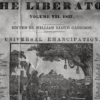
In the light of the worldwide anti-racists protests taking place across the world, two current UoP students, Lois Marriott and Becca Francis, argue passionately for the need to educate young people about the history of black people’s experience of racism. We both chose to take units during our history degree that would help us understand issues on race and white privilege. This included “ Racism and Anti-Racism in Postwar Britain” taught by Dr. Jodi Burkett and “African American History and Culture” taught by Dr. Lee Sartain. We also learned about the history of slavery on the core units of our degree, as well as the impact of Imperialism. A combination […]

Continue Reading 0
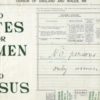
Census form 1911 cropped

The 1911 census: the government and the suffragettes have a conversation

A 1911 census form provides evidence of the ways in which the suffragettes challenged state authority.  This piece was written by second-year UoP history student Ashleigh Hufton for the second-year module, Danger! Censorship, Power and the People. Forms articulate conversations between two parties, argues Dobraszczyk, in an article on the Victorian census. [1]  A 1911 census return form is a useful document to view when analysing the relationship between the liberal government and individual social actors. [2]  This was the first census to be completed by the homeowner, allowing individuals to choose what information the government attained.[3] The suffragettes utilised this power to challenge state authority through their “census boycott”. […]

Continue Reading 0
Marseille 1A

Summer vacation 2020: a virtual tour round Marseille

In this post, PhD student and Gale ambassador Megan Ison shows that even under lockdown conditions, our horizons need not be limited, as she takes us on a virtual vacation in France, using Gale primary sources, to get us in the mood for that holiday we plan to take, next year … Summer 2020 – a vacation period with a difference After a busy exam season each May, students up and down the country look forward to long summer vacations. Unfortunately, due to COVID-19, we can’t catch a flight this summer holiday.  Excitingly, Gale Primary Sources, an online database of digitalised primary sources, allows you to still explore your cancelled holiday […]

Continue Reading 0
IMG_4500 Amelia presentation cropped

From Margins to Centre? An undergraduate conference on marginalised histories

At Portsmouth we were delighted to have not one, but two students presenting their work at the recent ‘From Margins to Centre’ conference at the University of York – a testament to the innovative and exciting research our students are devising and doing. In this blog post our second contributor, third year student Amelia Boddice, discusses the conference and where her paper fitted into the themes of the day. As well as building her employability skills, the conference prompted some thought-provoking reflections on the nature of historical enquiry: Amelia clearly got lots out of the day – just as it should be! The whole history team here at Portsmouth pitched […]

Continue Reading 0
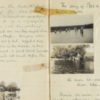
Alex Symonds pic cropped

Putting a positive spin on war-time evacuation

In this blog post, second-year history student Alex Symonds looks at a diary from World War II, now in the Imperial War museum.  The diary, apparently a joint effort by three girl guides, was probably intended for public consumption, and thus downplays the negative impact of war-time life for evacuees. The evacuation of British children in World War II is often depicted as a negative experience for everyone involved.  Children who had never even left their home towns suddenly had to adapt to life in the countryside and living with strangers, while their host families were confronted with dirty, disease-riddled children who were nothing like they had ever seen before.[1] […]

Continue Reading 0