History@Portsmouth

University of Portsmouth's History Blog

Tag Archives | Second World War

Together_Art.IWMPST3158 cropped

Empire and its afterlives 2: How do you teach history with primary sources?

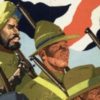
This is the second post in the Empire and its afterlives series. The introduction can be found here. Primary sources represent a wide range of materials which historians can draw on, and students made the most of this diversity. The podcast episodes included discussions of armed forces recruitment posters, political speeches and pamphlets, as well as a board game, a novel, and a series of photographs by a renowned photojournalist. Two of the students selected a recruitment poster from the Second World War as their recommended source, but suggested different ways of including it into the English and Welsh curriculum. Drawing on two articles on active remembrance and military multicultural heritage […]
Continue Reading 0
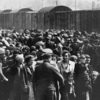
Auschwitz Hungarian Jews cropped

Could Churchill have done more to prevent the holocaust? The evidence of a personal letter

Callum Chinn, now in his final year studying history at Portsmouth, wrote this blog piece for the second-year Introduction to Historical Research module last year.  In it, he examines a letter written by Winston Churchill in July 1944, and what it reveals about the allies’ knowledge of and response to the holocaust. The twentieth century witnessed one of the most horrific atrocities of all time, the mass murder of Jews by the Nazis across Europe; known worldwide as the Holocaust. With a ‘recent estimate that 5.4 million to 5.8 million Jews were murdered in the Holocaust’, it raises questions about the speed of the allied response to the situation, whether […]

Continue Reading 0
Still cropped

Have yourself a (not quite so) very merry Christmas film

In this blog, UoP Senior Lecturer Rob James reflects on the changing popularity of the, now well-regarded, festive classic It’s a Wonderful Life. Rob tells us that the film’s success was not predetermined, and that it took a mixture of chance and luck, along with a well-told story of course, for the film to achieve its status as a seasonal favourite. Rob’s research covers society’s leisure activities and this feeds into a number of optional and specialist modules he teaches in the second and third year. In a recent poll featured in The Independent newspaper of the ‘Best Christmas Movies’, the 1946 Hollywood-produced film It’s a Wonderful Life came in […]

Continue Reading 0
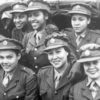
West-indian-ATS cropped

Winston Churchill’s thoughts on women’s work

In this blog, written last year for the second-year Introduction to Historical Research module, second-year UoP student Jaina Hunt wrote about how minutes of government discussions reveal changing attitudes to women’s war work. During the twentieth century, minutes were created and absorbed by the system of government, making them an important part of the political machinery of Britain.[1] The minutes of the Prime Minister Winston Churchill to his secretary of state for war show the importance of women’s war effort in changing attitudes towards women. Churchill placed great emphasis on the “immense importance of having a large number of women” in crucial wartime roles, such as positions in batteries and […]

Continue Reading 0
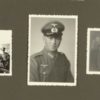
Photos of Wehrmacht soldiers

Germans coming to terms with the crimes of the past: the role of the Wehrmacht in World War II

In his dissertation third-year history student Tim Marsella studied the changing understandings and representations of the role of the Wehrmacht (German armed forces in World War II) within modern Germany.  He shows how a landmark exhibition in the 1990s challenged perceptions about the breadth of involvement in war crimes, but also how coming to terms with painful memories allowed German society to move on. Most students are aware when they start their degrees that they will be required to complete a dissertation in the final year of their course, and this prospect can seem quite daunting.What I would like to share is both my inspiration for this work and what […]

Continue Reading 0
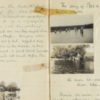
Alex Symonds pic cropped

Putting a positive spin on war-time evacuation

In this blog post, second-year history student Alex Symonds looks at a diary from World War II, now in the Imperial War museum.  The diary, apparently a joint effort by three girl guides, was probably intended for public consumption, and thus downplays the negative impact of war-time life for evacuees. The evacuation of British children in World War II is often depicted as a negative experience for everyone involved.  Children who had never even left their home towns suddenly had to adapt to life in the countryside and living with strangers, while their host families were confronted with dirty, disease-riddled children who were nothing like they had ever seen before.[1] […]

Continue Reading 0