Portsmouth was strategically important in the seventeenth century, but relatively little has been written on it. For their second-year Working with the Past project a group of UoP history students tried to discover more about three key Portsmouth figures from this time. In this second post in a series, Olivia Newby writes about the infamous murder of the Duke of Buckingham on Portsmouth High Street and how it became a catalyst for political change in the 17th century. When we think of famous people relative to Portsmouth’s history, we often think of Charles Dickens and his famed nineteenth century novels.[1] What we don’t often draw attention to, is the importance […]
Tag Archives | Charles I
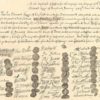
Don’t lose your head – surviving a dissertation on King Charles I’s killers
Below, one of last year’s third-year students, Alex Symonds, gives some timely advice on how to survive writing your dissertation. Alex’s dissertation was entitled “‘Cruel Necessity’: Understanding the Influences on the Commissioners in the Trial of Charles I”. As Alex’s supervisor, I knew she had it in her to do very well, but my mouth dropped to floor once I began reading her work. The dissertation was very bold in its arguments with an original central focus on humanising the regicides, as well as those chosen commissioners who chose not to sign the death warrant, who have been far less studied. Alex developed some sophisticated arguments around the role of […]
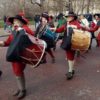
King Charles I – a man of principle, not a “man of blood”?
Many people instinctively blame King Charles I for the British Civil Wars. So recent UoP history graduate Connor Scott-Butcher’s decision to use his dissertation to challenge the idea, perpetuated by the regicides, that Charles was a “man of blood”, and the weight of historical argument ranged against him, always seemed to me a risky and provocative proposition. Below, Connor writes about how he went about his research. He gave a few sleepless nights to his supervisor, as well as himself, but the result was a balanced and well-structured argument, based around extensive use of contemporary primary sources. – Dr Fiona McCall. My topic for my dissertation was a thorough examination […]
Local History on Stage
As part of his practice research PhD at Portsmouth, Vin Adams has written a play about the events here in 1642, just before Charles I raised his standard in Nottingham. The play will be performed in The Square Tower in Old Portsmouth, itself part of the action of the play, and brings to life many figures of the time including Queen Henrietta Maria, John Pym, Sir William Waller and, of course, George Goring. For anyone interested in local history, this should be an interesting exploration of Portsmouth’s part in one of the battles that prefaced the Civil War. Vin has been working on the project with Fiona McCall, senior lecturer […]
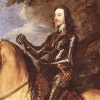
Using Visual Sources: Equestrian Portrait of Charles I by Anthony van Dyck
Holly Chambers, a second year History student at the University of Portsmouth, wrote the following blog entry on the portrait of Charles I by Anthony van Dyck for the Introduction to Historical Research Unit. Holly discusses the ways in which we can use visual sources such as this to understand more about society at the time the portrait was commissioned and painted. The unit is co-ordinated by Dr Maria Cannon, Lecturer in Early Modern History at Portsmouth. The Equestrian Portrait of Charles I by Anthony van Dyck is currently on display at the National Gallery in London. [1] The portrait shows King Charles I on horseback, riding as if at the […]
Forget gory Gunpowder – Jacobean England had a bloodcurdling appetite for violence
Dr Katy Gibbons, Senior Lecturer in History, has published an article in The Conversation. Here she reflects on responses to the violent scenes in the recent BBC 1 series Gunpowder, in particular the depictions of executions of Catholics by the Protestant authorities. This discussion reflects her research interests in early modern Catholicism in England and Europe, which is one theme in her final year special subject unit, ‘Conflict, Conspiracy, Consensus: Religious Identities in Elizabethan England’. To read the article, click here