Miles Orr’s dissertation explored the origins of jazz by examining the lives and lyrics of three key African-American artists: Louis Armstrong, Dizzy Gillespie, Buddy Bolden. Miles’s supervisor was Dr Lee Sartain, who has a special interest in Louisiana’s history – see his recent blog post on Louisiana’s civil rights activism. Miles is continuing to master’s study, where he will research Louis Armstrong’s life and influence in more detail. Louis Armstrong, Dizzy Gillespie, Buddy Bolden – African Americans who were part of an era of racial segregation, music and culture. This dissertation aimed to explore and uncover the origins of jazz music in America, tracing it back to its African roots […]
Tag Archives | slavery

An African slave trading commodity washed up off the Isle of Wight
Many of our UoP history students take the opportunity to do voluntary work in one of the many museums in Portsmouth or nearby. Second-year UoP History Isobel Turtle started volunteering even earlier. Having decided to defer her university entry, she started working at the Isle of Wight shipwreck centre in 2021. It’s given her lots of unique opportunities to learn how a museum works: highlights have included seeing how a museum becomes accredited by the Arts Council, how grants and funding are secured and used, how exhibitions are created from scratch, working on databasing the collection, helping with visiting school groups and managing volunteers. She has worked her way up […]
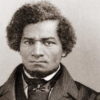
Self-identity under slavery: Frederick Douglass narrates his story
Joshua Bown, a first year History student at the University of Portsmouth, has written the following blog entry on the Narrative of the Life of Frederick Douglass: An American Slave, for the Fragments module, which looks at the possibilities and challenges of using primary sources for historical study. The module is co-ordinated by Dr Katy Gibbons, Senior Lecturer in History at Portsmouth. The use of egodocuments as a primary source for historians has provided both significant and controversial contributions to the field. As Laura Sangha puts it, the potential advantages of studying these personal documents seem obvious, in that they may ‘reveal what an individual actually thought and felt about […]
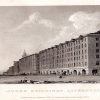
How to ‘forget’ difficult pasts: slavery, memory, and the maritime frame
In Theresa May’s ‘Brexit speech’, on January 17th 2017, the prime minister suggested that Britain’s “history and culture is profoundly internationalist” [1]. This is certainly one way of framing Britain’s historic relationship with the rest of the world. Alternatively, you might suggest that May spelt “centuries of colonial rule, oppression, slavery and genocide” wrong. As cultural sociologist Iwona Irwin-Zarecka argues, the range of possible interpretations of historic events and themes can be limited through processes of ‘framing’ [2]. Such ‘framing’ doesn’t necessarily block out other possible interpretations, but it does act to restrict the range of meanings. The past can be ‘framed’ in certain ways, and certain interpretations and narratives […]