Over the last year, the History team’s Dr Mike Esbester, Senior Lecturer in History, has been working with a local history group to find out more about our region’s railway workers. Here he reveals more about this exciting partnership – including where you can see what they’ve produced.
Increasingly over the last few years my research has become much more collaborative in approach. That’s largely to do with my work as co-lead of the Railway Work, Life & Death project. The project looks at accidents to British and Irish railway staff before 1939, working with teams of volunteers at the National Railway Museum, the Modern Records Centre at the University of Warwick and The National Archives of the UK, and supported by the RMT Union.
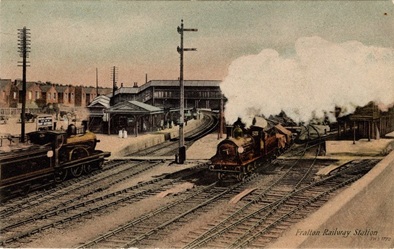
Since 2016 we’ve been transcribing reports of incidents, making them more easily available, researching the people and cases and sharing our work. To date we’ve produced a free database of over 115,000 individuals and incidents, from 1855-1939. It’s been a huge effort, and has seen those involved put in thousands of hours of work.
Over the last year, I’ve been involved in a new off-shoot of the Railway Work, Life & Death project, looking locally to us in Portsmouth. With funding from the University’s Centre of Excellence for Heritage Innovation, I’ve been working with the Havant Local History Group, on the ‘Portsmouth Area Railway Pasts’ project.
We’ve been researching the life stories of some of the railway workers in our area found in the Railway Work, Life & Death project database. We wanted to see if we could find out more about the individuals, beyond just the details of their accidents. Could we place them in their work, family and community contexts?
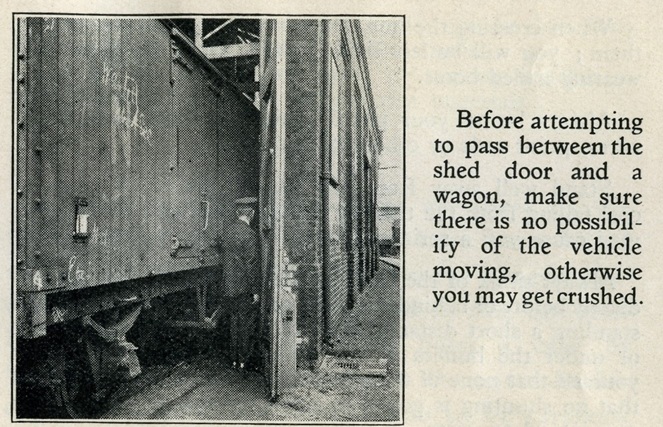
Over eight months we met regularly to establish shared principles and aims, to carry out research, and then to produce outputs to share our findings. I worked closely with Neil, Ann, Geoff and Alan – to whom I owe a particular debt of gratitude, for their tireless work, dogged determination in chasing down elusive details, expertise and local knowledge, and for their friendship.
It’s also been brilliant that as part of the research we’ve been able to work and share details with some of the descendants of the workers we’ve explored. Whilst some of the descendants are still in our area, some have ended up quite some distance away – including in Australia!
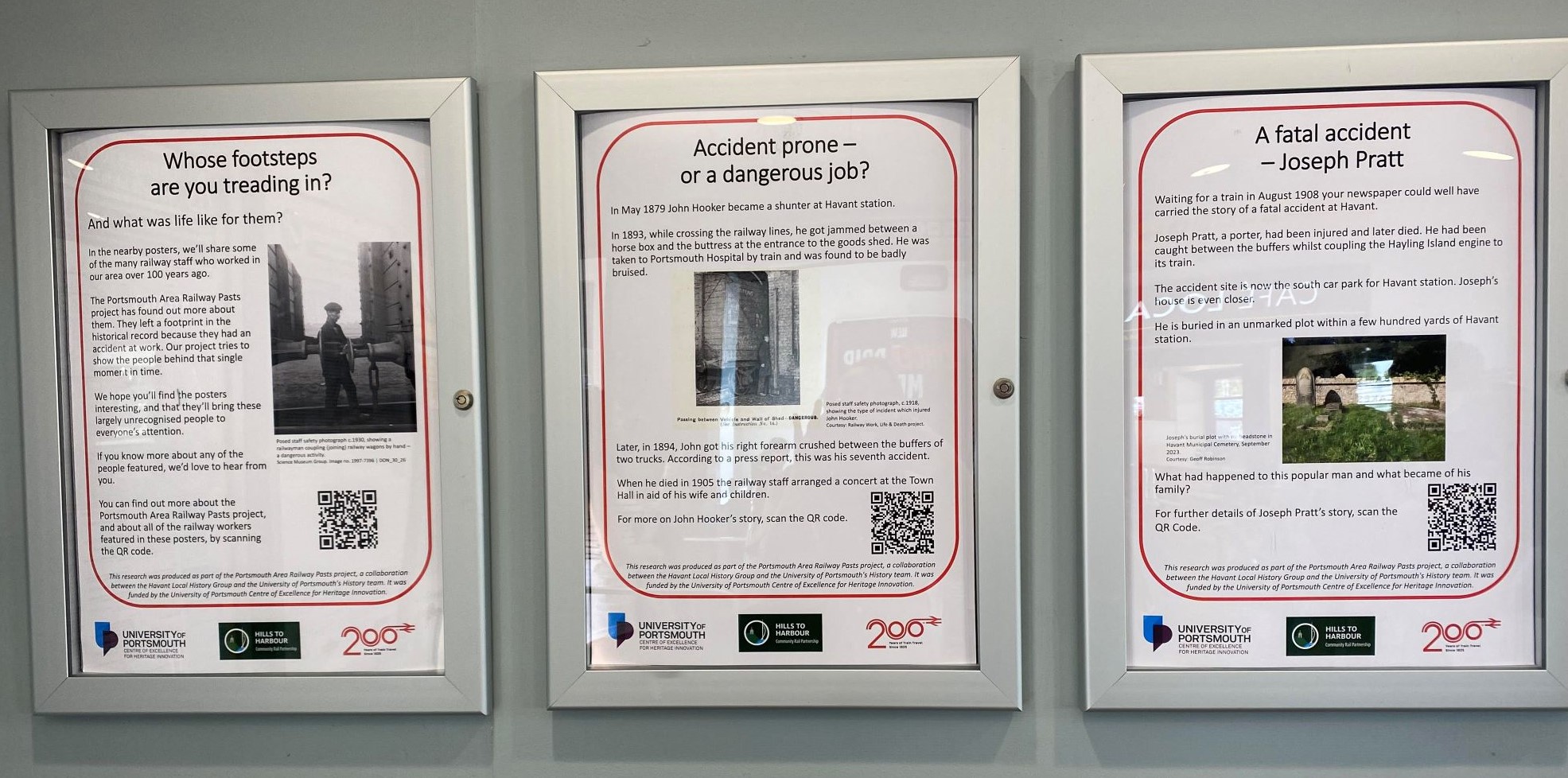
We’re now able to share more about the likes of Portsmouth-based porter James Pearce. Born in the countryside north of Portsmouth, he moved from agriculture to the railways in the 1860s. Working as a porter, loading and unloading goods, his leg was broken in an accident in 1884 at what’s now Portsmouth and Southsea station. It disabled him permanently; the loss of income appears to have thrown James and his family into the workhouse, where he died in 1889.
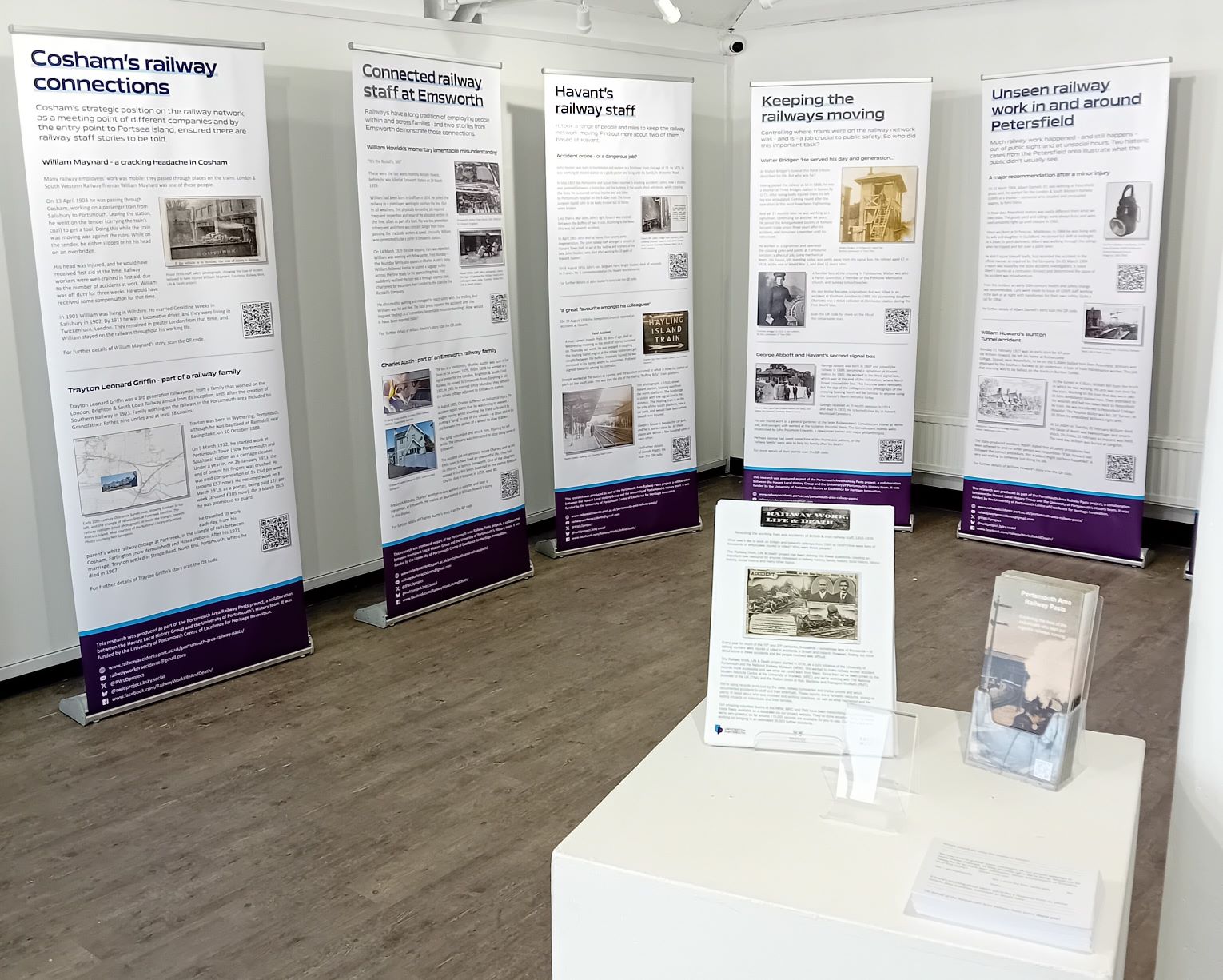
These life stories are being made available in a few ways. We’ve co-created a travelling exhibition, ‘The south coast’s forgotten railway workers.’ It’s currently on display (until 9 October 2025) at The Spring Arts and Heritage Centre in Havant. This will then come to the University, in the exhibition space in Park building, from 13 October-17 December 2025. There’s more on the exhibition here.
We’re taking bookings for the exhibition for 2026, so please get in touch if you’re interested. We want to see it shown widely and reaching as many people as possible.
Early feedback has been very positive:
‘Very interesting and informative. Brought history to life’
‘As a family historian it was very pleasing to see the results of research into those who died on the railways. No longer just a name on a long list, they became real again to the reader/ descendants’
‘Very interesting. Vividly highlights the dangers of working on the railways in past decades’
We’ve also worked with our local Community Rail Partnership, Hills to Harbour, to feature the railway workers and their stories on posters in our local stations. So far these have appeared at Havant station, and we’re working on plans for Petersfield, and in the future Portsmouth.
We’ve produced a leaflet to share some of the workers, and all of the life stories are being added to our project webpages, too. In addition, Neil, Alan and I are giving an online talk for Hampshire Archives Trust, on 19 November 2025, about the project.
Overall, it’s been hard work to work collaboratively and co-productively, ensuring that the different expertise and experience we all brought to the project was valued and recognised. But it’s been tremendously rewarding to do, and has produced something really interesting that wouldn’t have been possible otherwise. It’s gratifying to see the results of our work reaching the public – do have a look!
No comments yet.