Last year our own Dr Maria Cannon won a fellowship to study at the Folger Shakespeare Library in Washington D.C. While there she came across a manuscript book, Of the Commendable Estate of Widowehoode, a translation of a 16th century Italian work which advises widows on suitable behaviour, and afterwards wrote this blog piece for the Folger Library blog. Let’s just say that having any kind of fun is out. While its lessons can appear restrictive and depressing to modern tastes, this lengthy guide reveals that women were responsible for negotiating their own behaviour, spirituality and relationship to God. https://www.folger.edu/blogs/collation/how-to-be-a-true-widow/
Tag Archives | archives
Portsmouth history graduate is Record Keeper of the Year
Portsmouth history graduate Chloe Anderson-Wheatley has been awarded the title of Record Keeper of the Year award by the Archives & Records Association, to recognise the extensive contribution she has made to record keeping for the Falkland Islands Government. Over the past eighteen months Chloe has significantly raised the profile of the Island’s National Archives service, increased local and international engagement and awareness with the collections, and has built new partnerships. Having been a volunteer archivist as a teenager, Chloe gained a history degree at the University of Portsmouth, before completing an MA in Archives & Records Management from University College London, returning to the islands to become their first […]
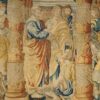
The Lost Crafts of the Past
As part of their work on the second year core module ‘Working with the Past’, three University of Portsmouth History students – Chanel Parker, Loraya Head, and Gemma Norris – collaborated with Portsmouth Museum and Art Gallery to curate a three-month exhibition that both celebrated the crafts of our ancestors and highlighted the importance of preserving the craftspeoples’ skills for future generations. In this blog, written for Hampshire Archives Trust, Chanel Parker discusses the research methods the group used when curating the exhibition. ‘Working with the Past’ is coordinated by Mike Esbester. To read the blog, click this link. Slider image courtesy of Birmingham Museums Trust
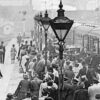
Blackout accidents on Britain’s railways during World War Two
University of Portsmouth History student Evan Cossburne produced a blog for the Railway Work, Life & Death project as part of his work on the second year core module ‘Working with the Past’, coordinated by Mike Esbester. Mike co-leads the RWLD project along with Karen Baker (Librarian, National Railway Museum) and Helen Ford (Manager, Modern Records Centre) with the assistance of Craig Shaw (Volunteer Administrator, NRM). In this blog, Evan looks at the impact of the Second World War on railway personnel’s working conditions, focusing particularly on the accidents caused by a ‘lack of light’. To read the blog, click this link.
Enhancing students’ skills and experiences: A Twitter takeover, an exhibition and a podcast
As a team we always encourage our students to enhance their skills while studying for their History degree with us, and one way we do this is by offering them opportunities to work with some of our external partners. In this post, we demonstrate how this is undertaken in one second year core module, ‘Working with the Past, co-ordinated by Dr Mike Esbester. As part of their studies during their History degree, our students have worked with a range of local and international institutions, including the Mary Rose Museum, Lloyd’s Register Foundation, the D-Day Story archive, Hong Kong Baptist University, and Pompey History Society, and have undertaken a wide variety […]
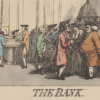
Rehabilitating Exchange Alley: why it was possible to trust eighteenth-century stock-brokers
On 26 April 2023 Professor Anne Murphy, Executive Dean of the Humanities and Social Science here at the University of Portsmouth, presented her paper on the nature of trust in financial markets in the eighteenth century. If you missed the paper, the recording is available to watch here. You will need the following password r?Qo7xmt to access the recording. An abstract for Anne’s paper can be found below. Anne’s latest monograph, Virtuous Bankers: A day in the life of the late eighteenth-century Bank of England, which presents an in-depth study of the eighteenth-century Bank of England at work, is published on 9 May 2023. For more details, please follow this […]