History@Portsmouth

University of Portsmouth's History Blog

Tag Archives | twentieth century

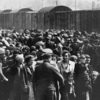
Auschwitz Hungarian Jews cropped

Could Churchill have done more to prevent the holocaust? The evidence of a personal letter

Callum Chinn, now in his final year studying history at Portsmouth, wrote this blog piece for the second-year Introduction to Historical Research module last year.  In it, he examines a letter written by Winston Churchill in July 1944, and what it reveals about the allies’ knowledge of and response to the holocaust. The twentieth century witnessed one of the most horrific atrocities of all time, the mass murder of Jews by the Nazis across Europe; known worldwide as the Holocaust. With a ‘recent estimate that 5.4 million to 5.8 million Jews were murdered in the Holocaust’, it raises questions about the speed of the allied response to the situation, whether […]

Continue Reading 0
new recruits cropped

The Fitzroy Report, 1904: How the poor physical condition of Boer War army recruits prompted social change

Following the end of the second Boer War in 1902, the government appointed an Inter-Departmental Committee to investigate why so many would-be recruits had been in poor physical condition. The Committee, chaired by civil servant Almeric FitzRoy, has become known as the Fitzroy Report.  Second-year UoP history student Ben Hessey discusses the report, what it tells us about contemporary ideas about parenting, gender, eugenics and social provision, and its longer-term significance.  This piece was originally written for the second-year Danger! module, which investigates issues of censorship and state control between 1850 and 2000 and is taught by Dr Rob James and Dr Mike Esbester. During the early twentieth century the […]

Continue Reading 6
19th_Century_Female_Shoplifter cropped

The Forty Elephants – a forgotten female gang of South London

Last year Emily Burgess produced an outstanding dissertation on the all-female working-class gang from South London known as the Forty elephants.  Here she writes about how she came up with the idea and carried out the research, with Rob James as supervisor.  Emily concludes with some useful advice for all our students currently writing proposals for their third-year dissertation.  Emily has since set up her own consultancy for historical research and consultancy – see our previous post. From a young age I was fascinated by criminal history. My grandmother and family from the East End of London would often tell me tales about the Krays and other villainous figures from […]

Continue Reading 0
stop-your-cruel-oppression-of-the-jews-flohri cropped

Jewish persecution in Russia and its influence on Jewish immigration to London

The history team are excited to learn that recent UoP history graduate Emily Burgess has set up her own consultancy, Midas Tomes, for historical research and writing.  Emily produced an outstanding dissertation on the female South London gang known as the Forty Elephants so it is great to see her prosper! Checkout this blog post from another UoP history graduate Ben Humphreys on the website. https://www.midastomes.com/themidastomesblog/blogpostone   Click here to see previous posts by Ben and Emily on the UoP history blog.    

Continue Reading 0
1024px-Katherine_johnson_john_glenn cropped

International Women’s Day 2021: Katherine Johnson: Mathematician at NASA

To celebrate International Women’s Day, we are delighted that UoP history graduate Ian Atkins has written this profile of pioneering NASA mathematician Katherine Johnson. For International Women’s Day I have chosen to write about Katherine Johnson, NASA mathematician, most famous for her work in calculation of the trajectory for manned space orbits, and subsequent lunar expeditions.[1] Johnson was born in White Sulphur Springs, West Virginia on the 26th August 1918. She was the youngest of four children, her mother a teacher and her father an all-purpose odd job man.[2] Katherine had always excelled at maths and was ahead of her class from an early age. Margot Lee Shetterly indicates that […]

Continue Reading 0
Portsmouthbanner cropped

The hidden heritage of a naval town: women’s community activism in Portsmouth since 1960

As a naval town, Portsmouth’s history has tended to have a masculine focus.  But many Portsmouth women have actively campaigned for women’s rights and set up practical initiatives in the Portsmouth area to improve the lives of women. A Heritage Lottery Fund grant enabled the setting up of a project to interview these women and capture their stories.  UoP history reader Sue Bruley was one of the project leaders.  Project co-lead Laurel Forster, Reader in Cultural history in the UoP School of Film, Media & Communication explains more about the project and its outcomes. The main aim of this project was to document the activism of  women in the Portsmouth […]

Continue Reading 0