History@Portsmouth

University of Portsmouth's History Blog

Tag Archives | twentieth century

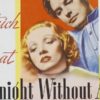
Poster from the Alexander Korda filk Knight without Armour

“There are no revolutions in well-governed countries” – British film and the Russian Revolution

In this blog, Rob James explores how the events of the 1917 Russian Revolution impacted British film production in the mid-twentieth century. Rob tells us that the chance of a film being made depicting those tumultuous events depended on how they were presented. If the film demonstrated any sympathy towards the revolutionaries, then a ban was inevitable. Rob’s research covers society’s leisure activities and how they were shaped and controlled from both within and outside the entertainment industry. His research feeds into a number of optional and specialist modules that he teaches in the second and third year. In the 1934 film Princess Charming, produced by Michael Balcon, one of […]

Continue Reading 0
Still cropped

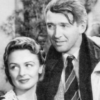
Have yourself a (not quite so) very merry Christmas film

In this blog, UoP Senior Lecturer Rob James reflects on the changing popularity of the, now well-regarded, festive classic It’s a Wonderful Life. Rob tells us that the film’s success was not predetermined, and that it took a mixture of chance and luck, along with a well-told story of course, for the film to achieve its status as a seasonal favourite. Rob’s research covers society’s leisure activities and this feeds into a number of optional and specialist modules he teaches in the second and third year. In a recent poll featured in The Independent newspaper of the ‘Best Christmas Movies’, the 1946 Hollywood-produced film It’s a Wonderful Life came in […]

Continue Reading 0
2nd_Manchesters cropped

The banality and brutality of war: Wilfred Owen’s letter to his mother, Susan Owen, February 1917

In the second in our series on First World War sources, second-year UoP student Charlotte Lewis discusses what can be learned from a letter by famed WWI poet Wilfred Owen to his mother Susan. Whilst Wilfred Owen’s poetry is well known for describing the horrors of the First World War, his letters to his mother, Susan Owen, give the reader an insight into Owen’s personal experiences and reactions hiding behind his poetry. In light of this, this blog will focus on a letter written by Owen in February 1917 to his mother.[1] Through the analysis of this letter, this blog will try to convey not only its significant use in […]

Continue Reading 0
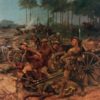
The_Battle_of_the_Somme,_July-november_1916_Q1374 cropped

Normalising the brutality of the Somme: a soldier writes to his aunt, 13 October 1916

In the first of a series on First World War sources, in this blog second year UoP student Oliver Rooney discusses the experiences of Charles Wyndham Wynne, expressed through his letter to his aunt Sophia Sarah Wynne on the 13th October 1916, several months before his death in June 1917, as well as the historiography surrounding the importance and limitations of First World War letters. [1] The atrocities of the First World War have been conveyed through personal letters between soldiers and their families. These personal sources provide historians with a first-hand understanding of the soldier’s experiences during wartime, and the emotions they conveyed and attempted to conceal from their […]

Continue Reading 0
Photos of Wehrmacht soldiers

Germans coming to terms with the crimes of the past: the role of the Wehrmacht in World War II

In his dissertation third-year history student Tim Marsella studied the changing understandings and representations of the role of the Wehrmacht (German armed forces in World War II) within modern Germany.  He shows how a landmark exhibition in the 1990s challenged perceptions about the breadth of involvement in war crimes, but also how coming to terms with painful memories allowed German society to move on. Most students are aware when they start their degrees that they will be required to complete a dissertation in the final year of their course, and this prospect can seem quite daunting.What I would like to share is both my inspiration for this work and what […]

Continue Reading 0
stalin cropped

Sinister Stalin, the Cold-War Octopus

The cartoonist David Low’s depiction of Stalin as an octopus, published in 1948, sits within a long-standing tradition of monstrous, dehumanised depictions of political enemies.  Octopi in particular have been used in the past to represent the sinister ambitions of Prussia, Britain, France, Nazi Germany, America and the oil industry, amongst others.  But as second-year UoP History student Georgia Hutton explains, Low’s octopus critiques both Soviet policy and contemporary Western-bloc attitudes towards it.  Georgia wrote this piece for the second-year module, Danger! Censorship, Power and the People. A cartoon by David Low for the Evening Standard, on 15 April 1948, reveals a great deal about the British, contemporary Western, perspective […]

Continue Reading 0