This is our second piece by second-year UoP history student Elliott Thomas, who has come a long way since I taught him in his first year at Portsmouth. As you might guess from his choice of topics, Elliott has his sights set on a career in the foreign office! On 4 May 1978, at the refugee camp of Cassinga, in Southern Angola, Namibian refugees ran out to greet the planes they thought were sending supplies gathered by Sam Nujoma (the president of the Southwest Africa People’s Organisation, SWAPO).[1] Instead of supplies however, they were greeted by an astronomical amount of explosive ordinance, delivered by the South African Airforce, a total […]
Tag Archives | Africa
Empire and its afterlives 2: How do you teach history with primary sources?
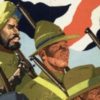
This is the second post in the Empire and its afterlives series. The introduction can be found here. Primary sources represent a wide range of materials which historians can draw on, and students made the most of this diversity. The podcast episodes included discussions of armed forces recruitment posters, political speeches and pamphlets, as well as a board game, a novel, and a series of photographs by a renowned photojournalist. Two of the students selected a recruitment poster from the Second World War as their recommended source, but suggested different ways of including it into the English and Welsh curriculum. Drawing on two articles on active remembrance and military multicultural heritage […]
Empire and its Afterlives 1: Applying the skills of the historian to the present
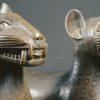
This is the first post in a series of four showcasing the work of second year students from across the University of Portsmouth Faculty of Social Sciences Click this link to see a video of George the Poet on the Benin Bronzes Empire and its Afterlives is a module available for second year students across History, Politics, International Development, International Relations and Languages. Newly created for the 2020/2021 academic year by Natalya Vince and Tony Chafer, it encouraged students to draw on research from a range of disciplines in order to better understand empires from a historical perspective, their legacies, and the way they are present and represented around us […]