History@Portsmouth

University of Portsmouth's History Blog

Tag Archives | eighteenth century

reynolds triumph cropped cropped

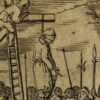
Criminal punishments in Devon, 1598-1638

In the second-year UoP history module, Underworlds:  Crime, Deviance & Punishment in Britain, 1500-1900, taught by Dr Fiona McCall and Professor Brad Beaven, students study the history of crime and punishment between 1500 and 1900. Students can take this option on a range of courses at Portsmouth, including History, Criminology and English Literature.  In this blog post, based on his work for the module, second year UoP history student Edward Sainsbury discusses what can be learned from a detailed table of statistics on sentences given to criminals at the Devonshire assizes and quarter sessions courts between 1598 and 1638. Over the course of an almost 30-year period almost 10,000 punishments […]

Continue Reading 1
Dragon Gun image 2 slider

The Dragon Gun: secrets of a local South-East Asian treasure

On 29 November 2023 we were pleased to welcome Thomas Davies, Assistant Curator of Artillery at the Royal Armouries: Fort Nelson, to the University of Portsmouth as part of our History Research Group Seminar series. Thomas presented his paper on the Dragon Gun, the iconic cannon housed at Royal Armouries: Fort Nelson on Portsdown Hill.  The Dragon Gun was captured in Myanmar by the British Army in the 19th century and presented to the Prince of Wales. Today it can be viewed in Fort Nelson’s Art of Artillery gallery. The gun dates to the 18th century, is only one of four in the world, and has always been believed to […]

Continue Reading 0
The_collier cropped

PhD by Publication – Top tips from an award-winning UoP history graduate student

  Anthony Annakin-Smith is a local historian with a diverse range of interests focused on maritime and industrial history in the late eighteenth and early nineteenth centuries.  Anthony was awarded the PhD by Publication from the University of Portsmouth in 2022 for his work on The Neston Collieries, 1759-1855: an Industrial Revolution in Rural Cheshire. The collieries date from the eighteenth century, when the main colliery was owned by local magnates the Stanley family, and were more successful than its better-known contemporaries in nearby south-west Lancashire and North Wales. It was the first large industrial site in west Cheshire and introduced the area’s earliest steam engine. Anthony’s supervisors for his […]

Continue Reading 0
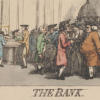
the bank screenshot

Rehabilitating Exchange Alley: why it was possible to trust eighteenth-century stock-brokers

On 26 April 2023 Professor Anne Murphy, Executive Dean of the Humanities and Social Science here at the University of Portsmouth, presented her paper on the nature of trust in financial markets in the eighteenth century. If you missed the paper, the recording is available to watch here. You will need the following password r?Qo7xmt to access the recording. An abstract for Anne’s paper can be found below. Anne’s latest monograph, Virtuous Bankers: A day in the life of the late eighteenth-century Bank of England, which presents an in-depth study of the eighteenth-century Bank of England at work, is published on 9 May 2023. For more details, please follow this […]

Continue Reading 0
800px-Toby_Fillpot_(BM_2010,7081.1369) cropped

From folk tale to cheap consumer good to object of wonder – the life history of a toby jug

Our new UoP history module, The Extraordinary and the Everyday: People, Places and Possessions, taught by Dr Katy Gibbons and Dr Maria Cannon, studies material evidence – objects, buildings, landcapes – as a starting point for asking questions about the past.  It employs an innovative form of assessment – the object biography, which recognises that material artefacts, just like people, accumulate histories and have their own life-stories to tell, about the meanings and values of the societies that produced, collected or consumed them.  Harry Odgers’ object biography told the complex story of a seemingly simple drinking vessel, a ‘Toby jug’. Objects of the past are incredibly useful and can offer […]

Continue Reading 0
The Battle of Culloden

The domestic colonisation of eighteenth-century Scotland

Third year student Kathryn Watts chose an original focus for her dissertation in investigating the eighteenth century attack on Scottish culture. As she argues below, colonialism is often looked at in the global context, but the domestic colonialism of Scotland (and Ireland) predated it, and provided a prototype for many of the colonialist ideas of racial hierarchy and methods of cultural indoctrination which followed.  It has been fascinating supervising Kathryn’s dissertation journey – ed. On April 16, 1746, the bloody battle of Culloden ended with Jacobite defeat; the rebellion of Bonnie Prince Charlie, crushed. This date became synonymous with the decimation of Highland culture, as pro-Government forces sought to destroy […]

Continue Reading 2