Emily Burgess, who studied for PhD in history at the University of Portsmouth, has had a paper published in Women’s History Review which is free to read here. The paper looks at press depiction of Alice Diamond, leader of the interwar Forty Thieves gang. By mythmaking, framing Diamond as an ‘Underworld Amazon’, ‘Giant’, and ‘Queen of the Terrors’, the press was able to project female gangsterism as a form of ‘internal terror’ to fuel fears over gender, post-war brutalisation and the changing interwar landscape.See a previous post about Emily’s work on London’s female gangsters here. Emily is a graduate of the University, having studied for a BA (Hons) History degree […]
Tag Archives | newspapers
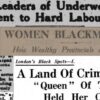
London’s female gangsters: press responses and gendered implications 1890-1940
On 17 May 2023 University of Portsmouth PhD researcher, Emily Burgess, presented her paper on the press’s treatment of female gangsters from the late-nineteenth to mid-twentieth centuries. If you missed the paper, the recording is available to watch here. You will need the following password T19#MUVU to access the recording. An abstract for Emily’s paper can be found below. Emily is a graduate of the University, having studied for a BA (Hons) History degree between 2017 and 2020 (awarded First Class honours) and an MRes in History between 2020 and 2021 (Distinction). She was awarded the ‘Robbie Gray Memorial Prize’ for the Best Undergraduate History Dissertation in 2020, and started […]
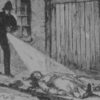
The ‘Whitechapel Horrors’ – Victorian newspapers report Jack the Ripper as gothic fiction
The ‘Jack the Ripper’ murders in East London in the late Victorian period have become infamous. In this piece, first year UoP history student Seamus McLoughlin looks at how an article in a Victorian newspaper was of its time in choosing to ignore known facts about the case, or any compassion towards the victims, in favour of speculation, sensation and gothic horror. This piece was originally written for the first year ‘Fragments’ module, which looks at primary sources, and is taught by Dr Maria Cannon and Dr Katy Gibbons. Over a hundred and thirty years later, Jack the Ripper’s murders are still regarded as some of the most infamous acts […]
The banality and brutality of war: Wilfred Owen’s letter to his mother, Susan Owen, February 1917
In the second in our series on First World War sources, second-year UoP student Charlotte Lewis discusses what can be learned from a letter by famed WWI poet Wilfred Owen to his mother Susan. Whilst Wilfred Owen’s poetry is well known for describing the horrors of the First World War, his letters to his mother, Susan Owen, give the reader an insight into Owen’s personal experiences and reactions hiding behind his poetry. In light of this, this blog will focus on a letter written by Owen in February 1917 to his mother.[1] Through the analysis of this letter, this blog will try to convey not only its significant use in […]
Sinister Stalin, the Cold-War Octopus
The cartoonist David Low’s depiction of Stalin as an octopus, published in 1948, sits within a long-standing tradition of monstrous, dehumanised depictions of political enemies. Octopi in particular have been used in the past to represent the sinister ambitions of Prussia, Britain, France, Nazi Germany, America and the oil industry, amongst others. But as second-year UoP History student Georgia Hutton explains, Low’s octopus critiques both Soviet policy and contemporary Western-bloc attitudes towards it. Georgia wrote this piece for the second-year module, Danger! Censorship, Power and the People. A cartoon by David Low for the Evening Standard, on 15 April 1948, reveals a great deal about the British, contemporary Western, perspective […]