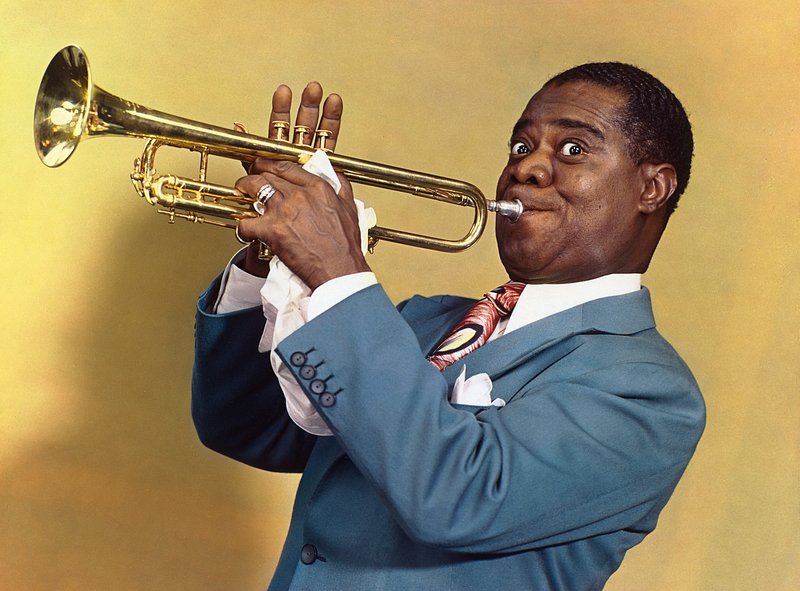
Miles Orr’s dissertation explored the origins of jazz by examining the lives and lyrics of three key African-American artists: Louis Armstrong, Dizzy Gillespie, Buddy Bolden. Miles’s supervisor was Dr Lee Sartain, who has a special interest in Louisiana’s history – see his recent blog post on Louisiana’s civil rights activism. Miles is continuing to master’s study, where he will research Louis Armstrong’s life and influence in more detail.
Louis Armstrong, Dizzy Gillespie, Buddy Bolden – African Americans who were part of an era of racial segregation, music and culture. This dissertation aimed to explore and uncover the origins of jazz music in America, tracing it back to its African roots which emerged out of the vibrant city of New Orleans in the early 20th century. By examining key artists, this study shows how their roles and various personalities played a part in shaping the sound and identity of a whole era of music and how black identity through music was able to reflect race, gender and class dynamics.
Jazz developed from a rich background beginning in the Deep South with the introduction of sharecropping, described as a more solitary version of the plantation life. It developed during the transatlantic slave trade when slaves from African countries were shipped sporadically into New Orleans, starting around 1718. These slaves brought across an integral part of their life, music. Music was part of both daily and ceremonial life, particularly in the northwestern Senegambian region where many Black New Orleanians originated from.[1]
This ultimately led to the creation of Congo Square as many slaves wanted a way to continue embracing their culture. From the period of the late 1750s, Congo Square acted as platform for “African slaves, Native Americans, and racially mixed free people of colour gathering every Sunday for communal trading and recreation” and resulted in various first-hand accounts of slave dances and music.[2] Due to New Orleans’ geographic placement at the end of the Mississippi river, it became a key landing point for slave traders therefore providing a constant influx of people from the US, Caribbean and Africa which offered a wide source of cultural change and merging into what was eventually known as ‘jazz’.
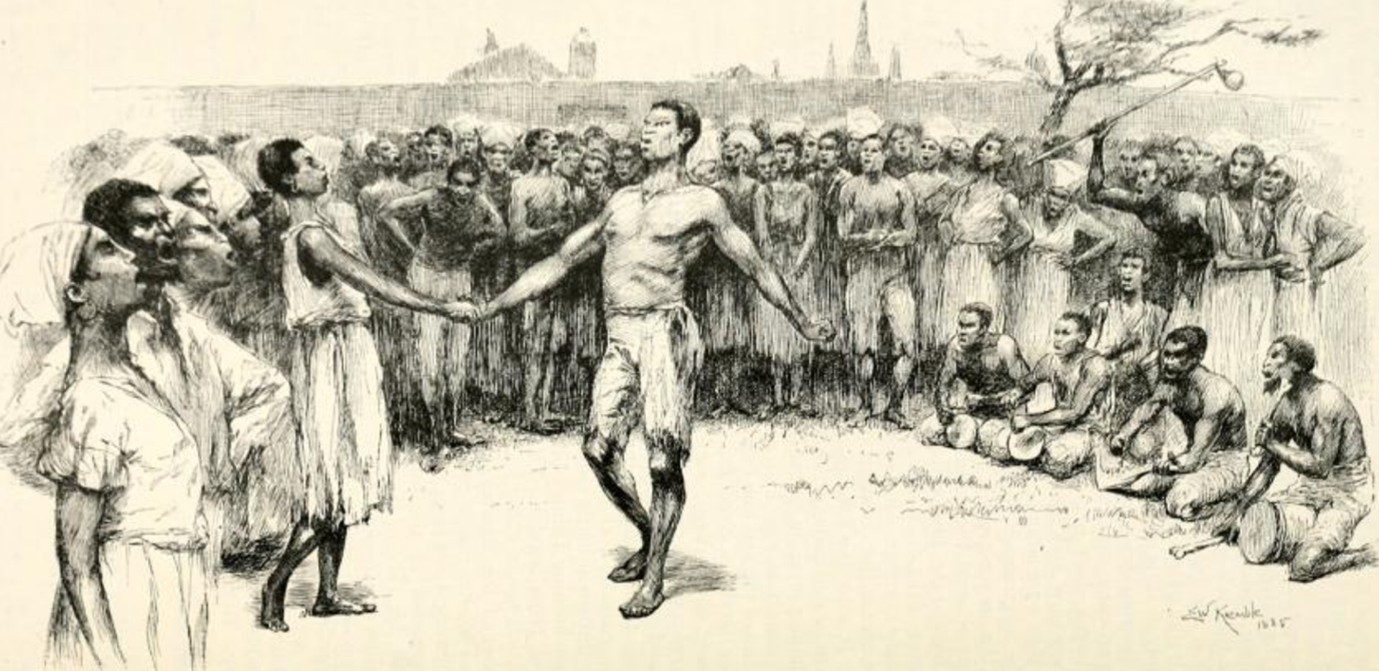
Dancing in Congo Square, Edward Windsor Kemble, 1886.
Jazz only evolved from this point, emerging as not only a powerful form of entertainment, but as a powerful symbol of rebellion and social change, used by African American artists as a way of expressing themselves and a key part of the Civil Rights push throughout the 20th century. I aimed to explore the specific lyrics produced by artists as a primary source and delve into their personal lives and the hardships they faced which drew them to jazz and performing.
My decision to research this topic was due to my lifelong interest in music and the under-appreciation of the history behind jazz music. Jazz remains a misunderstood art form to many and most only know the names of some of the artists and not the hardships they were forced to face and the reasoning behind their music. The topic was originally meant to be focused on race dynamics however as I studied and researched, I expanded to include gender and class issues which opened my eyes to another understood aspect and culture significant through the Harlem Renaissance – one of the biggest historical events of the 1900s which led to cultural and social expansion of not only African American music but literature and art.
I found picking the right topic is so important as for me, my dissertation rarely felt like work, but more like a hobby. I would find myself sitting down whenever I had free time to want to write it, which as a non-academic student who hated school and always prioritised sport, this was a new experience for me.
I want to say a special thankyou to Dr Lee Sartain, who supported my work throughout and helped me achieve a first in this study. Something I aimed for yet was unsure if it could be achieved. I am looking forward to my master’s study which is a more focused version of this study on Louis Armstrong himself and his individual effects on America and the still very under-appreciated, underrated art form of jazz.
[1] Mary Ellison, “African American Music and Muskets in Civil War New Orleans,” Louisiana History: The Journal of the Louisiana Historical Association 35, no. 3 (1994): 285.
[2] Richard Brent Turner, Jazz Religion, the Second Line, and Black New Orleans (Bloomington: Indiana University Press, 2009), 39.
No comments yet.