By Charlie Wilkinson
Southsea’s well was built in 1544, abandoned in 1814, covered over during later modifications and then rediscovered in the 1960s. That means it sat unused for over 150 years, during which: the garrison changed, the fort was remodelled, obsolete artillery (including stone shot) was discarded, domestic waste accumulated. This blog discusses three objects that were discovered inside the well at Southsea Castle: a wooden bucket and pulley, stone cannon balls and pottery flask fragments.
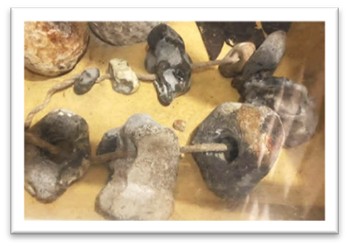
Figure 1: A Stone pulley system found at Southsea Castle well (Courtesy, Southsea Castle)
Object 1: Wooden bucket and pulley system
The original well was built against the inside of the Tudor curtain wall and equipped with a simple pulley block, an oak bucket, and a counter‑balance of flints. This arrangement formed a basic hoisting mechanism: the bucket was lowered into the chalk‑lined shaft to collect water, the pulley reduced the effort needed to lift the filled bucket and the flint counter‑weight balanced the load, making it easier and safer for a single person to raise water repeatedly. This is a classic Device‑Fort–era solution, robust, low‑tech, and reliable for a garrison that needed a secure internal water source during siege conditions. Wayne Cocroft refers to artillery defences but the same can be said for the well:
They … represent a human story of the individuals who designed or commanded them, and of the far greater number of men, women, and children of the fort garrisons who made lives within their walls. [1]
There are several practical reasons why the design was made this way. Firstly, self-sufficiency during attack: a fort cannot rely on external wells, therefore a well inside the walls was most practical. Secondly, labour efficiency: the counter-balance pulley allowed the garrison to draw water without excessive effort being most handy when you need all your energy to defend the fort. Lastly, durability: oak, chalk and flint were all materials readily available and were long lasting.
At the time, the well was a simple and quick solution to the problem at hand, the problem being needing a water source. The well was abandoned in 1814 when a new reservoir was constructed under the West Bailey. By the early 19th century, the garrison’s water‑management needs had changed, and the older Tudor well system became obsolete.
Object 2: Stone cannon balls
From the late 14th century gunpowder artillery and small arms began to appear on the battlefield, leading to profound changes in military tactics. [2]
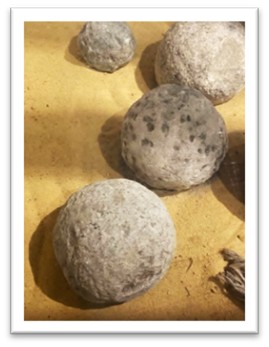
Figure 2: Stone Cannon Balls as found in Southsea Castle well (Courtesy, Southsea Castle)
As Wayne Cocroft explains, Southsea was a new fortification in 1544, it was equipped with a mix of older stone‑shot guns and newer iron‑shot guns, however the stone ammunition was cheaper and still widely used for wall‑mounted guns. To accommodate such changes from the 15th century onwards the “inverted keyhole-shaped cannon ports” started to be built, which are holes that cannons could fire through. Clarecastle Heritage explain that the stone cannon ball was often referred to as a “round shot” by the 17th century, the casualties were gory as they were capable of passing through 40 men because they operated like a “bouncing bowling ball.”[3]
The most likely use of the cannon ball is for ‘Sakers’, standard medium guns capable of firing 5-7 lb stone balls that were very common in Henry VIII’s device forts. However, this wasn’t the only type of cannon that accommodated these cannon balls. Firstly, there are ‘Falcons’ or ‘Falconets’ which are smaller calibre at 1-2 lb shots used on parapets and flanking positions. Secondly, ‘Port-pieces’ which are breach-loading guns specifically used for firing the stone shot, extremely common in early Tudor coastal forts. Finally, you have ‘Large Bombards’. Some early forts retained older guns that fired very large stone cannon balls, but Southsea Castle’s 1544 armament isn’t fully listed in surviving sources, so this remains less likely.
A strong possibility of why this was found in the well is that the stone shot was often discarded or repurposed when the stone shot became obsolete and the iron shot became standard towards the mid‑to‑late 16th century. Another contender is accidental loss during storage as wells and shafts in forts sometimes became convenient dumping points for unwanted or damaged munitions. However, they could also be used for structural use in some forts, stone shot was reused as hardcore or fill during later rebuilding phases.
Object 3: Pottery Fragments and Flask
Beverly Straube and William Kelso explain that
Ceramics have been used throughout history to ship, store, prepare, and consume food and beverage. In addition, they have functioned to provide heat, light, and other day-to-day comforts. And they were often used as a sign of social status. [4]
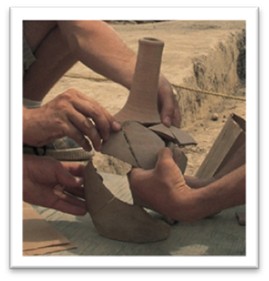
Figure 3: Detail of a London distilling flask as found in the course of excavation of the ca. 1610 cellar. (Courtesy, Association for the Preservation of Virginia Antiquities.)
Figure 3 shows the reconstruction of a pottery flask found at Jamestown, it isn’t exactly like the one found at Southsea Castle but it gives us an image to work with.
A pottery flask in a mid‑16th‑century castle like Southsea would have had similar, if not the same uses as stated above. Wells inside Device Forts were the primary water source, soldiers often filled small flasks or jugs to take water back to guard posts, gun platforms, or sleeping quarters. It was also cheap and durable, being common for a garrison soldier to own a pottery flask. However, it may have also held ale or beer, as ale was issued daily to soldiers it was often safer than drinking untreated water, although ale dominated daily consumption it may have also held wine (rare for an ordinary soldier but present for officers). Alternatively, it could have stored oil or vinegar, liquids used for cooking, cleaning or maintaining equipment.
Pottery fragments in wells are extremely common in archaeological sites, and they usually fall into one of three categories, very similar to the cannon balls. Accidental loss is common as a jug or flask could easily be dropped while drawing water. Deliberate disposal: wells often become convenient rubbish pits once they’re no longer in active use. During later modifications, broken pottery sometimes ended up in fill layers used to stabilise or cap wells, pottery from broken cooking equipment was routinely thrown into disused shafts. Therefore, the presence of a flask and pottery shards is exactly what you would expect from a working Tudor‑to‑Georgian military site.
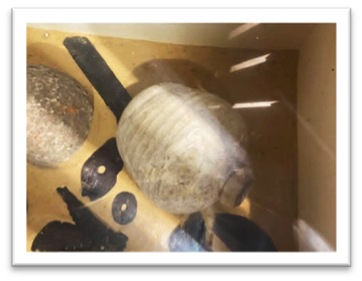
Figure 4: Pottery Flask found at Southsea Castle well (Courtesy, Southsea Castle)
References
[1] Wayne Cocroft, “Artillery Defences: Introductions to Heritage Assets,” In Historic England, edited by Joe Flatman and Pete Herring, (2018), 8
[2] Ibid.
[3] “Clarecastle Cannonballs” Clarecastle Ballyea Heritage, last accessed 22 April 2026.
[4] William M. Kelso and Beverly Straube, Jamestown Rediscovery, 1994-2004. (Richmond, VA: Association for the Preservation of Virginia Antiquities, 2004)
Further reading
Crook, Penny. “Approaching the archaeology of value: a view from the modern world.” Post-Medieval Archaeology 53, no.1 (2019): 1–20.
“Surrey – Hampshire Borderware” Jamestown Rediscovery: Historic Jamestown, last accessed 1 April 2026.
No comments yet.