Elliott Thomas’s enthusiasm for and seriousness about history was apparent to from the time I first taught him in his first year of studies, and he has contributed several pieces for this blog. For his dissertation he looked at the role of charismatic figures Joseph Chamberlain, Alfred Milner, and the writer John Robert Seeley in pushing ideas of radical, racist imperialism which at the turn of the twentieth century led Britain into a devastating conflict in South Africa. Elliott’s supervisor was Professor Brad Beaven. Elliott’s work has got better and better over the three years he has studied with us and it is great to see Elliott give a shout below to the work of Laura Barclay, one of our fantastic team of learning support tutors, who do such sterling work in helping students produce the best work they are capable of.
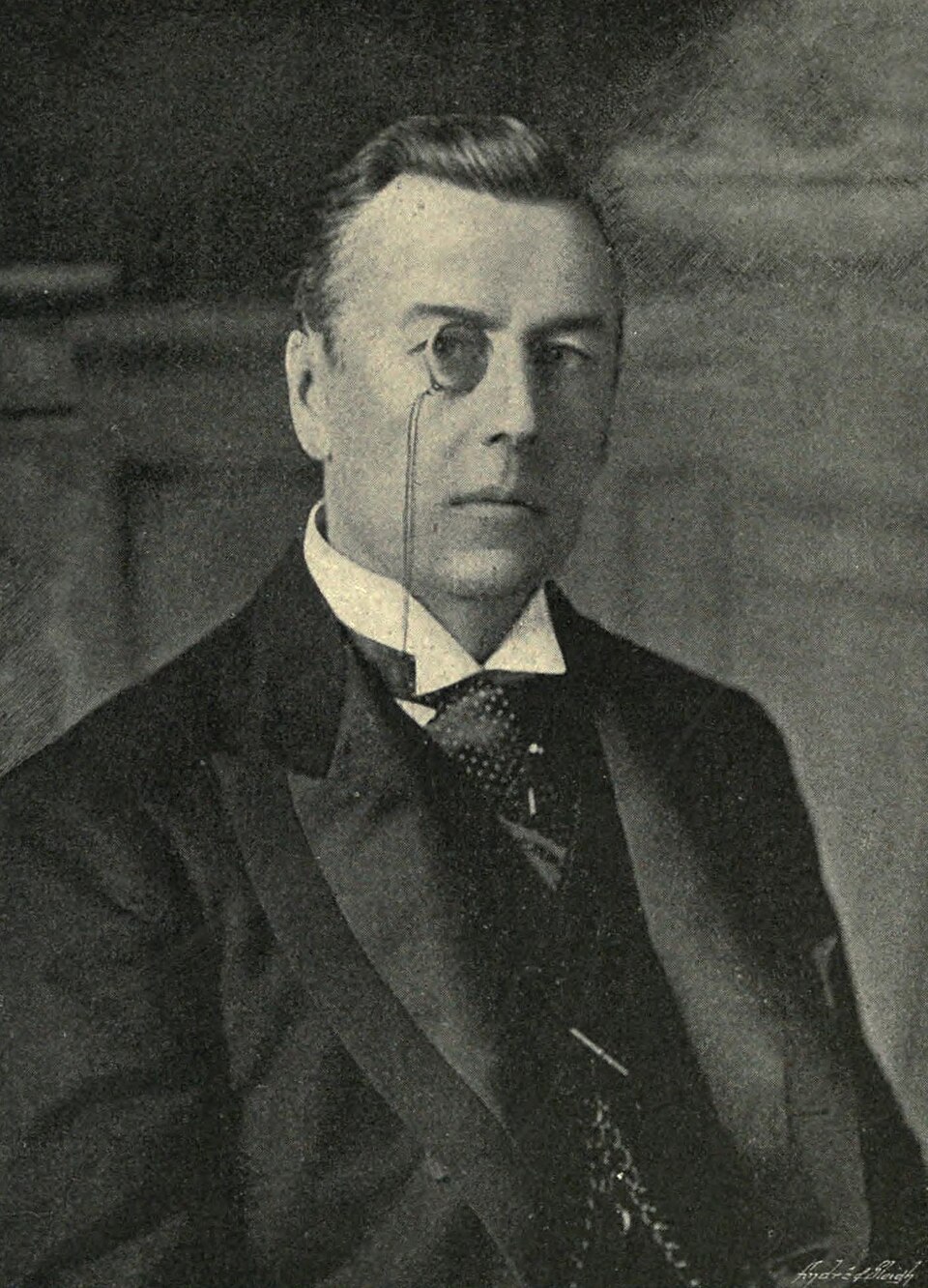
Joseph Chamberlain, 1895 (Public Domain)
High Commissioner for South Africa Alfred Milner and Colonial Secretary Joseph Chamberlain. In Britain these are two relatively obscure figures, with Joseph, the more famous of the two, giving his surname to one of Britain’s most controversial prime ministers. Despite modern obscurity, they were considered titanic figures of the Victorian period. Milner was widely considered to be a highly intelligent, capable imperial administrator, who befriended powerful figures across political divides and within journalistic circles. Chamberlain was seen as a passionate defender of British imperial interests, and he himself considered imperial integrity as crucial for the United Kingdom. This obscurity in Britain however does not reflect the deeply hostile attitudes held against these men for much of the 19th and 20th century by the Afrikaners (Boers) of South Africa. A monumental event of South African history was the Second Boer War (known as the South African War today), which saw the British Empire fight a prolonged struggle for dominance in Southern Africa. It eventually resulted into a bitter guerilla conflict and use of concentration camps, which saw two independent Boer states (The Transvaal and Orange Free State) being absorbed into the British sphere. These states would eventually be unified with the British colonies of the Cape and Natal as the Union of South Africa in 1910.
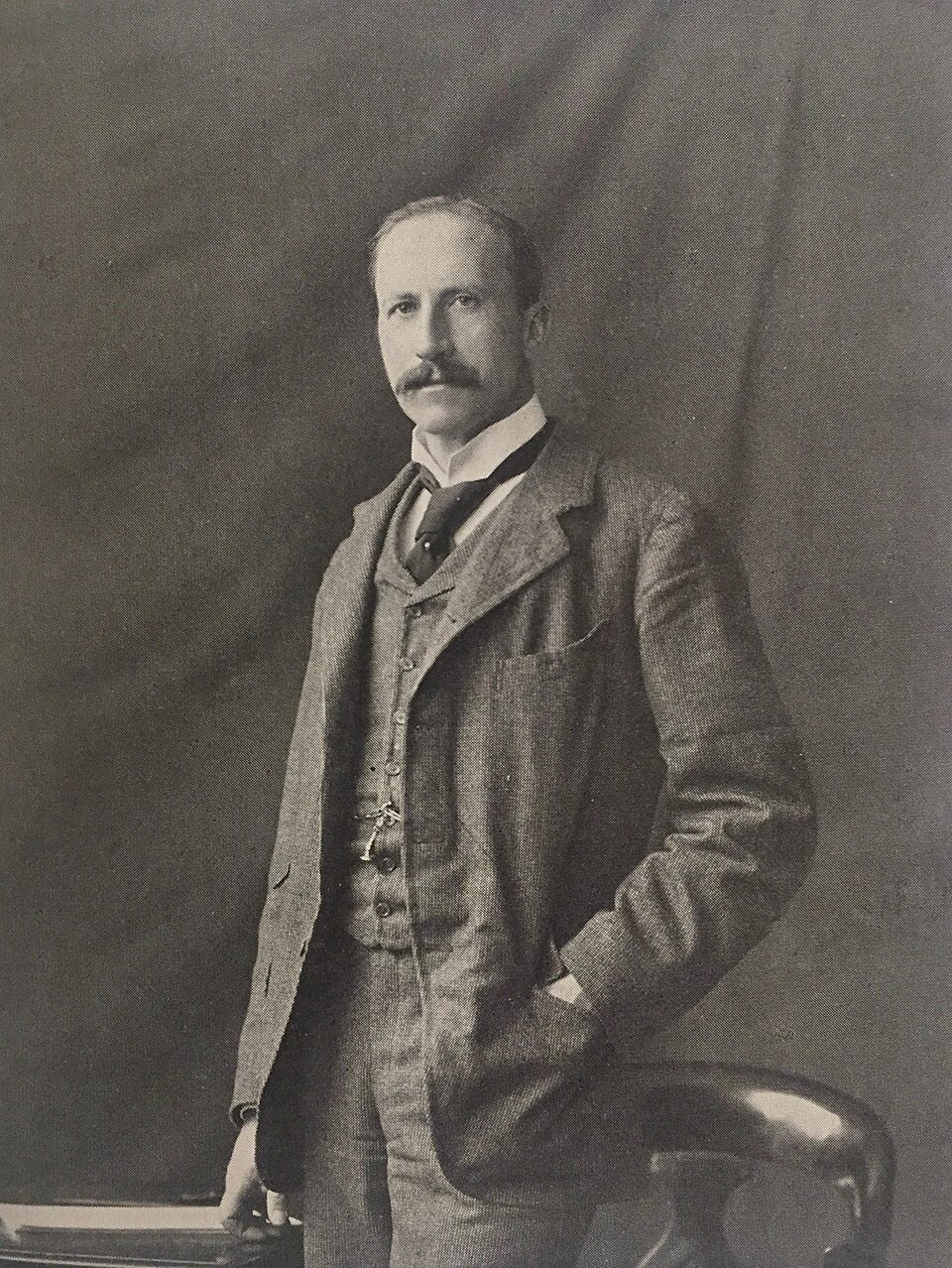
Alfred Milner, 1902 (Public Domain)
The military aspects of the South African War have been covered extensively by historians (I even learnt about them in A Levels!), but the origins of the conflict have remained of secondary interest to much of the historiography. Usually scattered across various histories of the British Empire, South Africa, Imperialism and of course, Milner and Chamberlain. This idea of unifying various historiography deeply interested me, as not only did it differ through the usual themes such as Marxist vs Liberal historians and Great Man history vs People’s history, but it also differed through geography. South Africa’s time under the Afrikaner apartheid system meant that its historiography reflected the state vision, that throughout trials the Afrikaner had triumphed and was ascendent in South Africa.
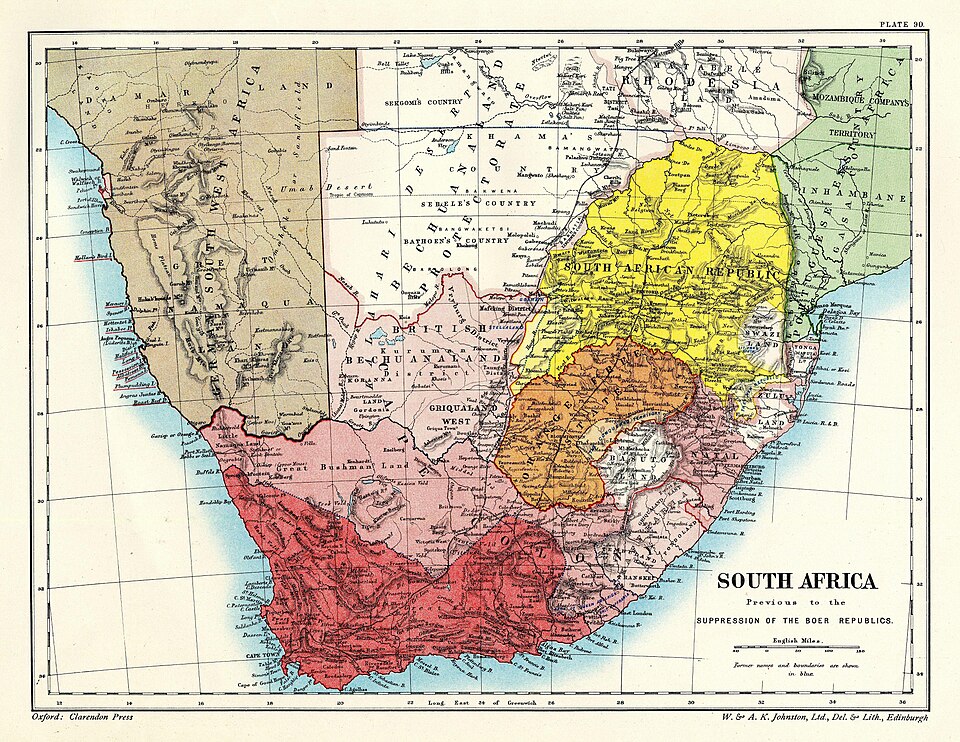
A map of South Africa in 1897: Transvaal in yellow; the Orange Free State in orange (public domain).
As a result of this, Milner and Chamberlain were often solely blamed for the war, being considered the personification of British imperialism and capitalist greed. Meanwhile over in Britain, the 1970s saw a revival of interest in the South African War, which was spearheaded by Marxist historians who saw the war as a prime example of how the British Empire was built by capitalist economics. E.J. Hobsbawm bluntly iterated this by stating ‘whatever the ideology, the motive for the Boer War was gold’.1 Furthermore, recent historiography has begun analysing the atmosphere of racialism, Social Darwinism, and imperial anxiety that was present in Britain at this time. To these historians, anxieties about the English/British race ‘falling behind’ its European and American competitors caused it to go to war with the Boer republics to not only assert itself but protect members of the British race who inhabited these states to work on the gold fields (the so called Uitlanders).
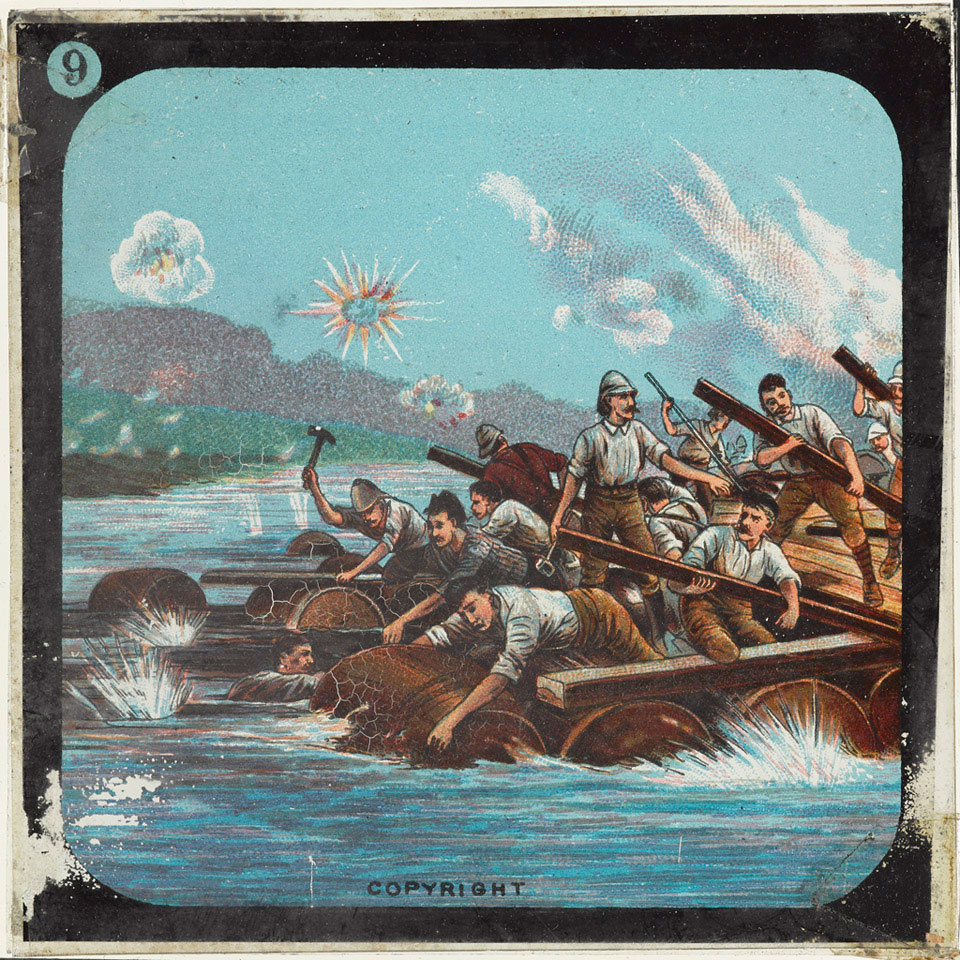
British soldiers building a pontoon bridge during the siege of Ladysmith, Lantern Slide, 1900, National Army Museum, NAM. 1998-07-27-12
During my research, I came to the conclusion that these various strands of historiography were all pieces of the same puzzle and began to argue that Milner and Chamberlain held a symbiotic relationship with an ‘ecosystem’ of British racialism, nationalism, jingoism and Social Darwinism. Effectively, Milner and Chamberlain’s ideas and actions were informed by their historical context, and their actions influenced society as a whole.
There were two massive surprises during the writing of my dissertation. The first one was how pervasive this attitude of British racial superiority was across political lines and society. Turbocharged by the Irish Home Rule debate of the 1880s and championed by Chamberlain and the Conservative Party, many believed that it was Britain’s god-given mission to build a global spanning empire. Alongside this, it was believed that the Anglo-Saxons were special and gifted in this mission of empire building, this would result in the Afrikaners being seen as lesser and even accused of being just as ‘savage’ as uncolonized peoples.
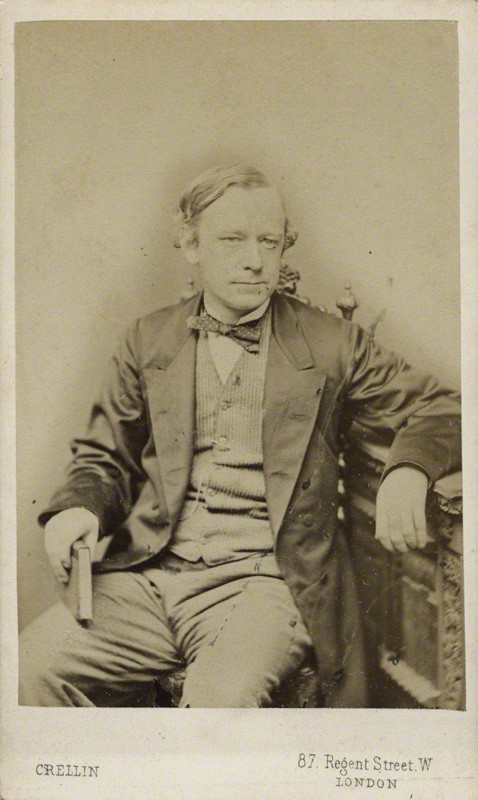
John Robert Seeley, 1866
The second thing that surprised me was the continuing cropping up one man: John Robert Seeley. Seeley was a historian, who would publish a manifesto in 1883 titled The Expansion of England, that would see him lifted to national fame, eventually being granted a knighthood by Lord Rosebery. Seeley argued the most important development in modern history was the establishment of a global spanning English empire, arguing that it was unique as it carried the English nationality across the globe, thus creating a ‘Greater Britain’. Seeley would use his landmark piece to argue that Britain was being left behind as the English had forgotten their imperial mission. Seeley is relevant as his thinking aligned with the top British official in South Africa at the time of the Boer War: Alfred Milner.
Milner was deeply alarmed at Britain’s apparent weakening and so came to the decision that a war in South Africa would reverse imperial fortunes and instil a sense of patriotism in the general population. In order to produce this outcome, he formed connections with various journalists to push his viewpoints whilst also taking a hostile stance towards the Boers, deliberately exacerbating tensions. Chamberlain, whilst sharing Milner’s belief that war in South Africa was becoming increasingly necessary, took a secondary role, mainly being Milner’s man in Whitehall. Chamberlain would cover for Milner, despite chastising him for his actions.
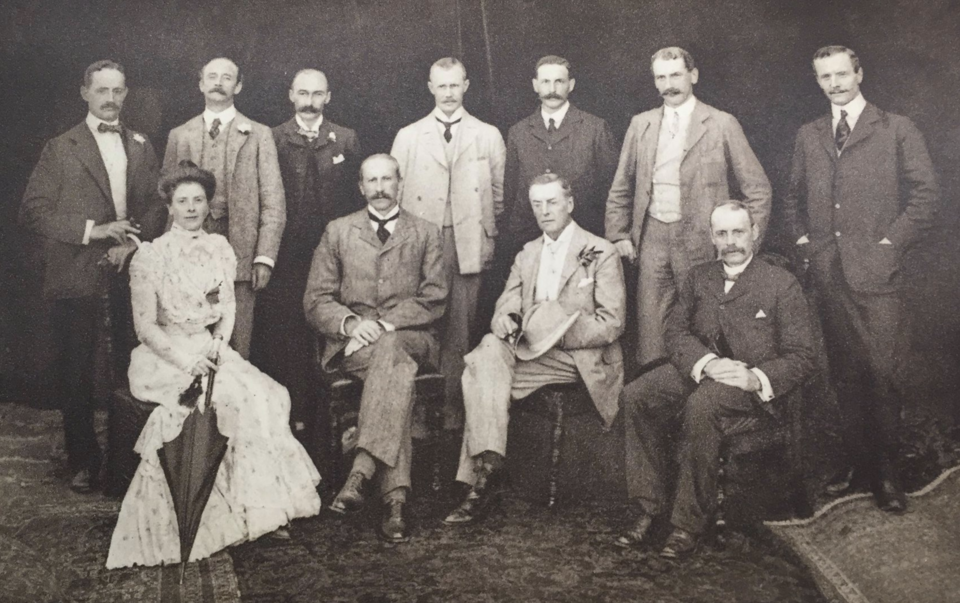
A photo of Milner (Sat in the middle, first to the left) and Chamberlain (Sat in the middle, first to the right) in South Africa (1903), (Public domain)
Overall, the dissertation highlights that charismatic public figures can exploit an atmosphere of radical emotions for their own benefit or to impart their own vision onto the nation. Milner thought that he would create a resurgent empire through war in the South African hinterlands. Instead, he got the empire drawn into a brutal quagmire that lasted 2 years.
Working on this dissertation, despite the stress, has been a highly rewarding experience. It allowed me to delve into a subject that seemed to be endless yet logical and straightforward. Whilst I bumbled around with it for the first half of the year, thanks to my supervisor Brad Beaven and the Laura Barclay from the learning development team, I was able to iron it out and create it to a first-class standard. My one piece of advice is to be willing to change things and seek others’ opinions. This dissertation went through many iterations, yet thanks to various opinions and a lot of effort (with some downtime to do sports!) it came out strong.
See Elliott’s other posts:
How white South Africa obstructed the decolonisation of Southern Africa during the Cold War
“In God is our trust” – How evangelical Christians became so crucial to Trump’s Republican Party
Getting creative with early modern history
Elliott also has his own blog at https://substack.com/@devonianintelligence
No comments yet.