For their second-year Working with the Past project, UoP history students Daniel Rickler and Sebastian Burgess chose to research the history of crime and punishment in Hampshire. In contemporary Britain, we have moved beyond the need to deter crime through humiliation, physical punishment and execution. But as we look to Hampshire from the 1600s onwards, we see a brutal and bloody history including, in Portsmouth in 1782, the last person to be hung, drawn and quartered for treason. Daniel and Sebastian examined both the wider policies of government and individual cases alongside the ritualistic nature of these punishments, to show how unnecessary they were and how far we’ve evolved. Both students had studied the second-year module Underworlds: Crime, Deviance and Punishment, 1500-1900, taught by Dr Fiona McCall and Prof. Brad Beaven.
Petty Crimes
For petty crimes such as stealing clothes or industrial materials, in past centuries you could be transported, imprisoned and whipped either in private or public. These harsh penalties for such trivial offences were meant to deter further offences due to their brutal nature. However with such rampant unemployment, poverty and insecurity, offences continued. Men and women in Portsmouth were publicly whipped and imprisoned for stealing stockings and handkerchiefs, a bullock’s heart, printed cotton, a pair of shoes. Public whippings also took place at Winchester, and at the scene of crimes committed in Basingstoke, Alton and Ringwood.
Capital crimes: the implementation of the ‘bloody code’
The number of offences punishable by death rose from 60 to in the late 1600s to 255 in 1815. This was the result of the implementation of the Waltham Black Act of 1723, named after a group of Hampshire poachers known as the Waltham Blacks who killed the deer of the bishop of Winchester at Waltham Chase in Hampshire, and the beginnings of the system of criminal punishment which has been termed the ‘bloody code’.
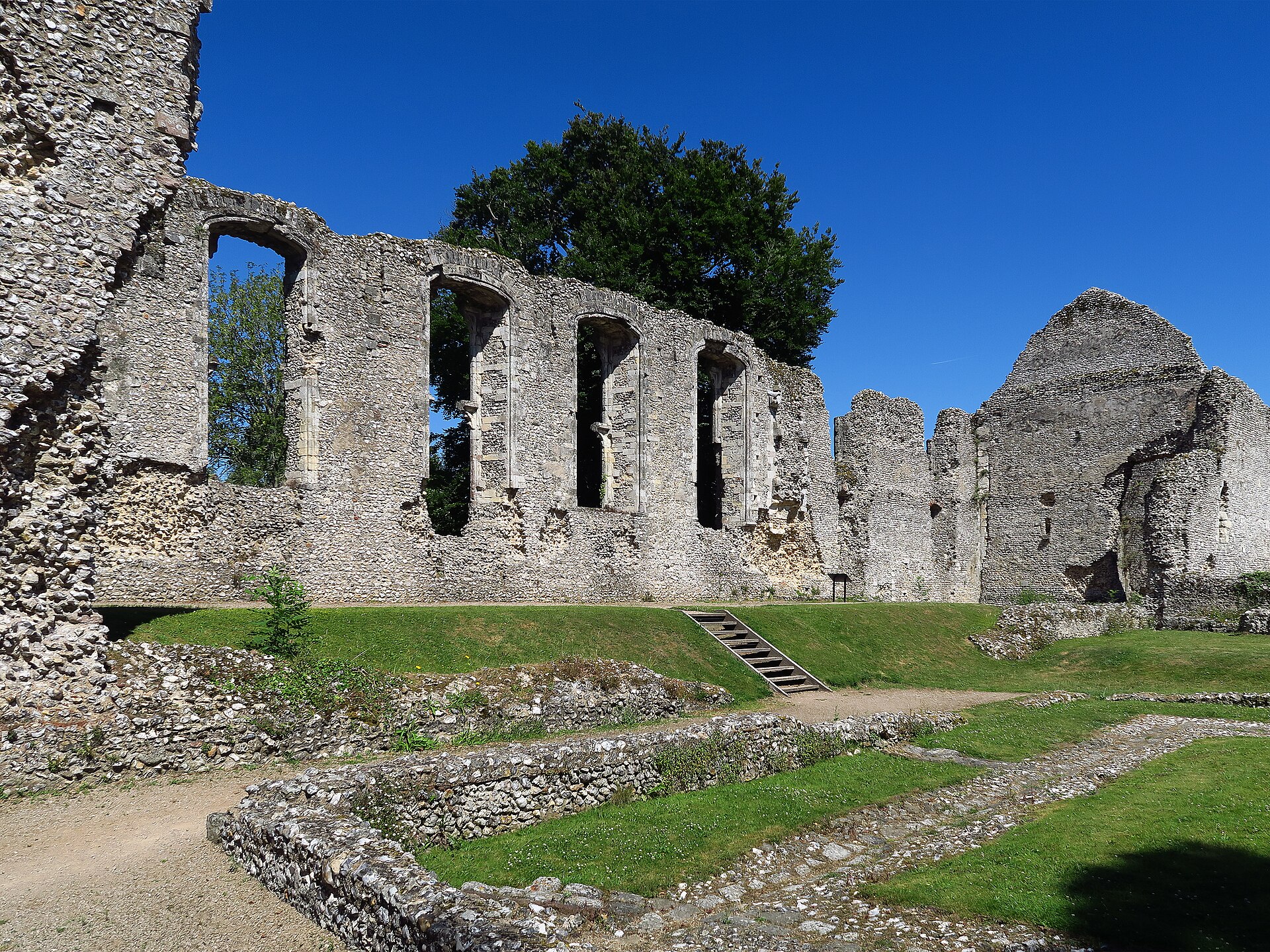
The Waltham Blacks poached on the lands of the bishop of Winchester at Waltham Chase, who had his palace (now ruined) at Bishop’s Waltham.
Crimes punishable by death under the ‘bloody code’
- Murder
- Arson
- Forgery
- Cutting down trees
- Stealing horses or sheep
- Destroying turnpike roads
- Stealing from a rabbit warren
- Pickpocketing goods worth a shilling (roughly £30 today)
- Being out at night with a blackened face
- Being an unmarried mother and concealing a stillborn child
- Stealing from a shipwreck
- Wrecking a fishpond
There is no apparent definitive list of all 225 offences. But each one had its own statute.
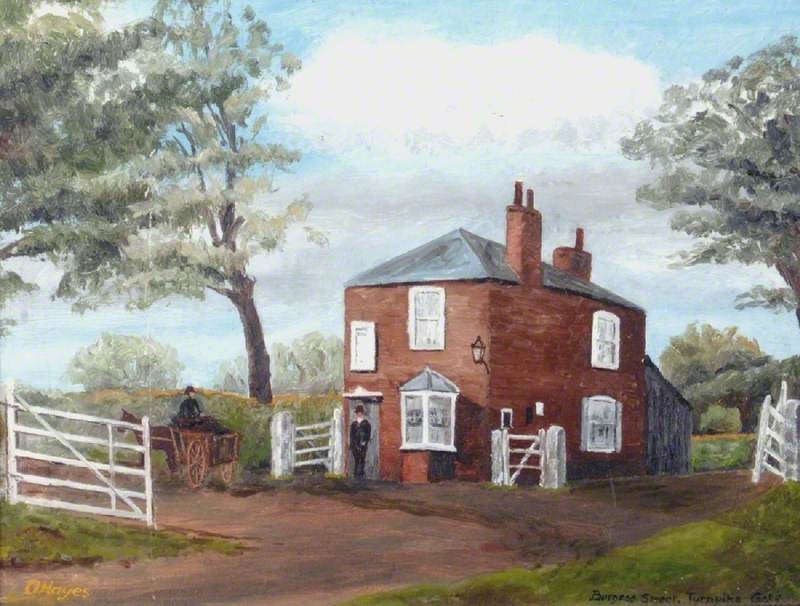
Turnpike roads were private toll roads with toll houses for the collection of tolls, like this one in the New Forest. Destroying them was a capital crime in the eighteenth century. Source: Hayes, A.; Burgess Street, Turnpike Gate; New Forest Museum and Library; http://www.artuk.org/artworks/burgess-street-turnpike-gate-25210
The ritualisation of executions in early modern Hampshire.
In early modern Hampshire punishment was not only used to discipline criminals, it also functioned as a public ritual designed to reinforce social order and authority. The Cambridge Dictionary defines ritual as a “way of doing something in which the same actions are done in the same way every time”, which can be seen in the repeated and public nature of executions. Historian Martin Ingram argues that punishments were intended to “combine shame and pain in varying proportions”, showing how justice relied on both physical suffering and public humiliation.
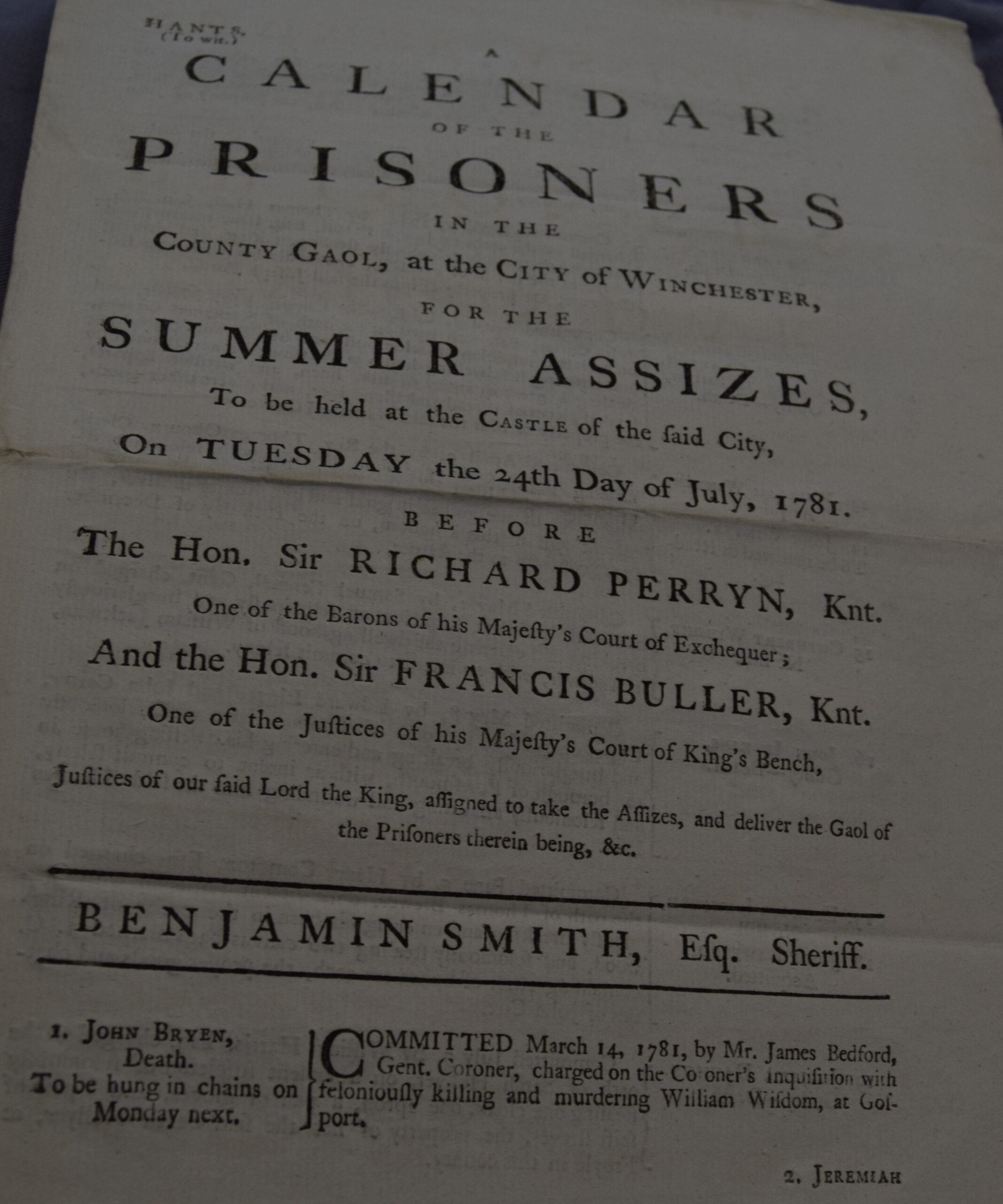
List of criminals tried at the assizes at Winchester on the 24 July 1781. John Bryen is condemned to be hanged for murder and his body will be gibbeted afterwards.
Executions in the early modern period were highly ritualised events that followed repeated and recognisable practices. Posters were used to announce hanging and inform the public of the date, time, and location, turning executions into organised public spectacles. In Hampshire, executions between 1739 and 1799 were commonly carried out at Gallows Hill in Winchester, showing how punishment often took place in fixed and symbolic locations. These events relied upon the participation of local communities. As Sarah Covington explains, crowds were “able to contribute to the punishment themselves by hurling rotten fruit, rocks, or even dead cats at the pilloried offenders, demonstrating how ordinary people became active participants in the ritual of punishment. William Hogarth’s prints suggest that executions became social occasions, with people selling goods, laughing, fighting and socalising during the event.

The crowd enjoying themselves at Tyburn. Detail from William Hogarth’s Idle ‘prentice executed at Tyburn, from his Industry and Idleness series of prints, published in 1747.
Religion also formed an important part of the ritual, as prayers, ceremonial dress, and crucifixes were often involved before and during executions. This can be seen in reports of the hanging of Ferdinando Petrani, an Austrian seaman, at Winchester in 1862, for murdering three people aboard a British ship, where a clergyman prayed with him throughout the night and held a crucifix during the execution itself.
The case of David Tyrie at Portsmouth 1782
The execution of David Tyrie at Portsmouth on 24 August 1782 demonstrates the ritualised nature of execution. Tyrie was a Scotsman working as a clerk at a Portsmouth naval office, who was caught corresponding with the French. This was the last recorded case of a man being hanged, drawn, and quartered in Britain. The execution followed a formal and symbolic process. Tyrie was placed on a sledge and taken in process from the prison to the place of execution, emphasisng the public and ceremonial nature of the punishment. According to the Hampshire Chronicle, “he conducted himself from the prison to the place of execution, and during the whole of the preparation for his miserable dissolution, with the most singular and magnanimity”, highlighting his expected performance of dignity and repentance before death.
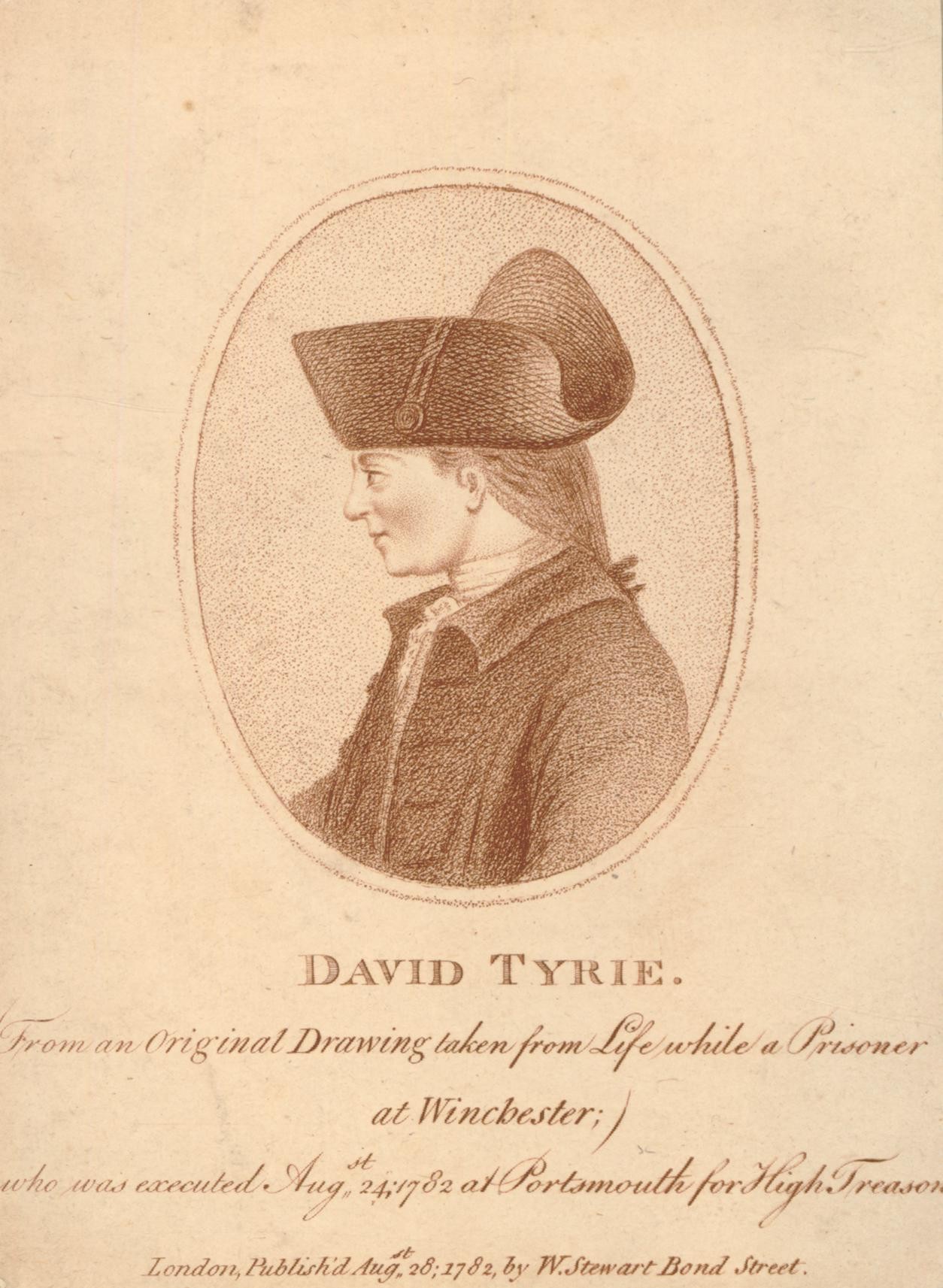
An engraving of David Tyrie, the last person in Britain hanged, drawn and quartered in Portsmouth in 1782, British Museum.
Reports describe an enormous crowd: according to the Annals of Portsmouth one hundred thousand people attended (although this number is probably exaggerated). Tyrie reportedly read from his Bible while the noose was prepared, reinforcing the strong religious elements often present in executions. Although accounts differ on the precise details of the punishment itself, they consistently emphasise crowd agency, with spectators seizing parts of Tyrie’s body after the execution (there were magical superstitions attached to the use of criminal body parts) and soldiers allegedly intervening to control the disorder.
Reform of the ‘bloody code’ under Sir Robert Peel.
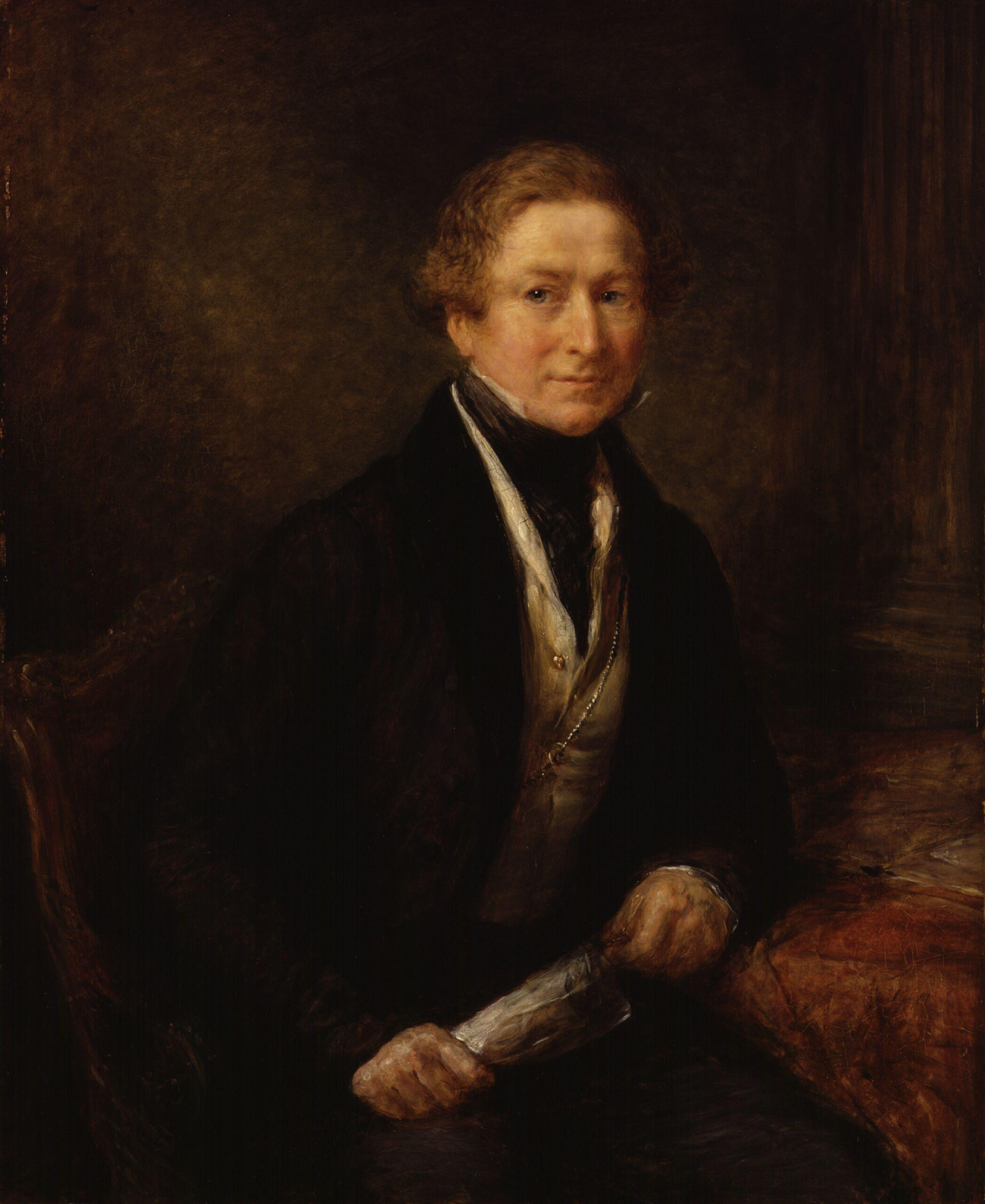
Sir Robert Peel, as home secretary, reformed the bloody code, reducing the categories of capital offences to just two; portrait by Robert Linnell, National Portrait Gallery.
But even these measures were not enough to deter crime. Crime continued to run rampant. As we continue to see throughout history, threats of physical harm and even death will not deter those who are most in need. Additionalies, juries were consistently hesitant to convict for minor offences, who would often acquit thieves instead of sending them for punishments. For this reason, Sir Robert Peel, the Home Secretary, began a series of reforms to the justice system in the 1820s, by getting rid of 250 offences that no longer seemed relevant. By 1841 only murder and treason were punishable by death. He also began the process of reforming the prison system to make the punishment of criminals more effective as well.
Further Reading
“Execution at Winchester,” The Manchester Guardian, 31 December 1862, 3
“Trial of David Tyrie for High Treason,” The Scots Magazine 44 (1 August 1782)
William H. Saunders, Annals of Portsmouth (Portsmouth, Eng.: Hamilton, Adams, 1880)
Cambridge Dictionary (Cambridge: Cambridge University Press).
Sarah Covington, ‘’Cutting, Branding, whipping, burning: The performance of Judicial Wounding in Early Modern England’’ in Staging pain, 1580-1800: violence and trauma in British theater, ed. James Robert Allard; Mathew R. Martin (2009)
James Cramer, Death on the Common at Portsmouth 1782: An Account of the Trial and Execution of David Tyrie for High Treason (Portsmouth: J. Cramer, 1986).
Executions in Southamptonshire (Hampshire) 1735–1799. https://capitalpunishmentuk.org/executions-in-southamptonshire-hampshire-1735-1799/
Hampshire Archive Trust, Hampshire’s Horrible History
Hampshire Genealogical Society – Punishment in Hampshire Quarter Session Courts – 1800, Roy Montgomery, HGS Researcher: https://www.hgs-familyhistory.com/2013/07/punishment-in-hampshire-quarter-session-courts/
No comments yet.