This is the second of two blogs by UoP second-year history student Gabriel Lawless, reflecting on the 50th anniversary of the reunification of Vietnam. The first post examined reactions to the My Lai massacre. This post looks at African-American perspectives on the Fall of Saigon. Gabriel wrote this blog for the second-year Working with the Past Module, run by Dr Mike Esbester. Gabriel’s tutor for this module was Professor Dave Andress. Note that this post includes graphic description of war-time atrocities.
In modern times it is uncontroversial to say that most would consider the Fall of Saigon in 1975 to mark the end of the Vietnam War and the collapse of American involvement in Southeast Asia. Whilst often portrayed as a moment of national failure, its symbolism was far more complex for African-American communities. African-American soldiers had served in large numbers, usually under unequal conditions, and returned to a society still mired by racial discrimination. For many African-Americans, veteran or not, the end of the war did not bring immediate progress, but rather prompted reflection on its purpose, consequences, and legacy.
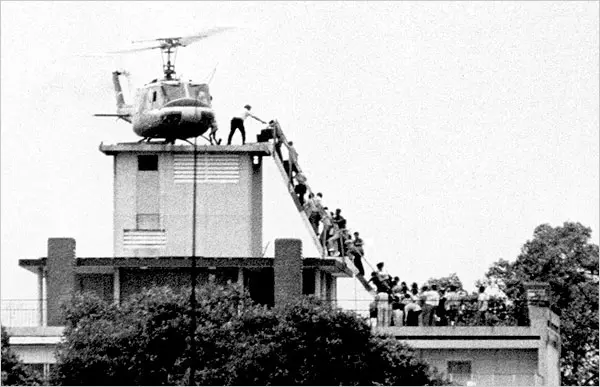
A member of the CIA helps evacuees up a ladder onto an Air America helicopter shortly before Saigon fell to advancing North Vietnamese troops.
The Fall of Saigon’s legacy lies in its characterisation as a moment of profound uncertainty for many Americans, but for African-Americans the end of the war raised questions about sacrifice, legitimacy, and justice, particularly for those who had already experienced inequality within the military. In Bloods: Black Veterans of the Vietnam War: An Oral History, Wallace Terry captures a range of reactions from African-American veterans reflecting on their service in Vietnam. Many describe a sense of disillusionment, questioning what had been achieved through their participation in the war. Although the Fall of Saigon is not always discussed directly, the nature of Vietnam’s abrupt and seemingly unresolved ending is evident throughout these accounts. Veteran Reginald Edwards informs us that attacks on civilians were often motivated by revenge, a distinctly un-American value. “They told us if you receive one round from the village, you level it.”, he explains.[1] Veterans frequently express frustration at the gap between the ideals they were told they were defending and the realities they encountered, so after Saigon “fell”, many were left wondering, “What had been the point?”. The fall of Saigon was an anti-climax, so perhaps this why it remains in people’s memory, with Edwards himself confirming that the horrors of Vietnam persisted long after he returned home.[2]
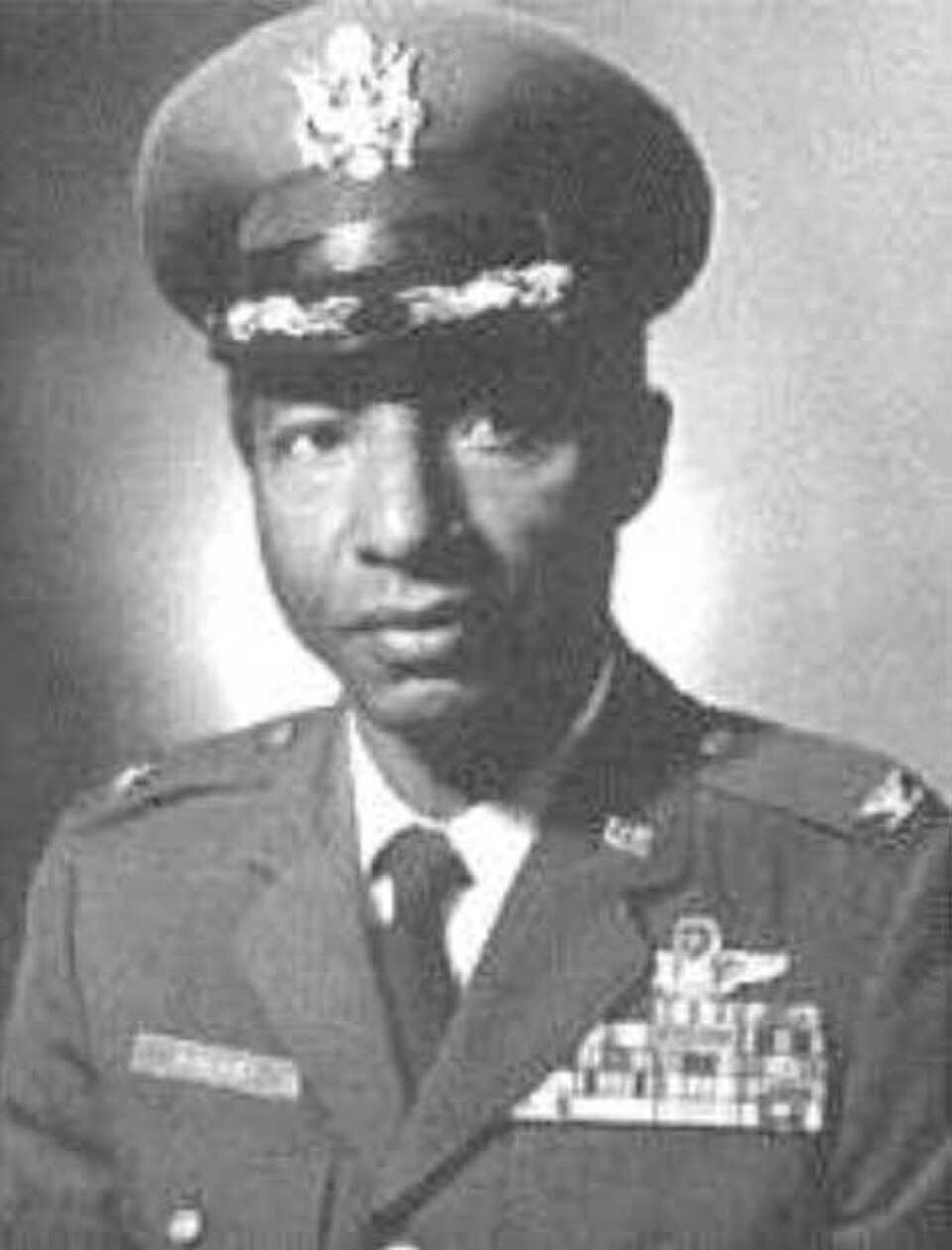
Colonel Fred Cherry (1928-2016) was a command pilot in the U.S. Air Force.
Colonel Fred Cherry, who had even been held as a POW during Vietnam, admits the persistent thoughts he had of Vietnam lay solely in how they could have secured a tactful victory, despite the mental trauma he endured. “I never dreamed about Vietnam.”, he tells Wallace, “But I still think about how we could have won the war.”[3] Here, we see military rank alone did not displace or save African-Americans from wartime trauma, that not all individuals process trauma in ways that are easily understood. Lieutenant Commander William S. Norman directly comments upon the ending of the Vietnam War and the scars it left for African-Americans specifically. “I don’t think you can call Vietnam a success story for the young blacks who fought there.” he admits. “A few stayed in service and did very well. But those who experienced the racism in a war we lost wear a scar. Vietnam left a scar on them that won’t go away. The black soldier paid a special price.”[4] African-American veterans were aware of the legacy they alone would have to shoulder.
Following the structure of the My Lai blog, we will now analyse artistic responses relating to the Fall of Saigon, once more using Yusef Komunyakaa’s Dien Cai Dau. This poetry collection offers a more introspective response to the aftermath of the war. Whilst his poetry rarely addresses specific historical events, such as the Fall of Saigon in our case, its poems still convey a persistent sense of unresolved tension. The war lingers in memory, shaping identity and perception long after its supposed conclusion. This absence of a clear conclusion reflects the experiences of many veterans, for whom the end of the conflict did not bring psychological closure. His appropriately named poem “After the Fall” hints at the desired return to societal norms after the war’s conclusion. However, this sense of control is contrasted with language that evokes feelings of unresolved trauma, with one such example, “Something deeper than sadness litters the alleys like the insides kicked out of pillows”, again reminding the reader of the gruesome body horror memorised by veterans.[5] Here, the Vietnam War’s inspiration for Komunyakaa’s work is blatant, not only in name and geography, but also in metaphor and theme. However, if we wish to contrast these themes, Haki R. Madhubuti’s poetry provides a more explicitly political interpretation. His work situates the end of the Vietnam War within a broader critique of American power and racial inequality. From this perspective, the Fall of Saigon can be interpreted as a moment that exposed the limits of U.S. authority, even if it did not resolve the injustices faced by African-Americans. Madhubuti’s emphasis on resistance and global struggle brilliantly connects the Vietnam War to wider movements for liberation.
Now we turn to Andrew Hunt’s The Turning: A History of Vietnam Veterans Against the War to contextualise African-American reactions within a broader historical framework. This text provides us with a strong historical foundation for contextualisation. The organisation Vietnam Veterans Against the War played a significant role in shaping opposition to the conflict, and many African-American veterans were active participants in this movement. In addition to this, The Turning informs us the anti-war sentiment of the VVAW was in full display even up until the Fall of Saigon on April 30, 1975.[6] Therefore, we are shown that whilst many African-Americans who fought in Vietnam were enlisted early in the conflict and were apathetic to politics, many became critical in its later years. Understanding whether the failure of the United States in Vietnam was caused by domestic opposition or militaristic shortcomings is not the purpose of this blog, however the contributions and achievements of African-Americans at home in opposing Vietnam is not to be understated. In the My Lai blog this is described in more detail, where I discuss the contributions of Californian House of Representatives member Ron Dellums. Furthermore, in the aftermath of the war, their critiques appeared increasingly validated, as the collapse of South Vietnam called into question the purpose and outcome of Americas intervention, a sentiment we saw shared earlier by William S. Norman in his interview. Whilst looking back as historians, we see a key theme that emerges across these sources: the idea that the end of the war did not help alleviate underlying issues of inequality. For many African-American veterans, the Fall of Saigon highlighted the disconnect between national rhetoric versus lived experience. This perspective challenges narratives that present the event as a definitive conclusion. Perhaps, for the readers who want to delve deeper into these expressions of personal suffering, compare these responses with mainstream media representations of African-American soldiers, this will help demonstrate the disconnect between reality and reported events.
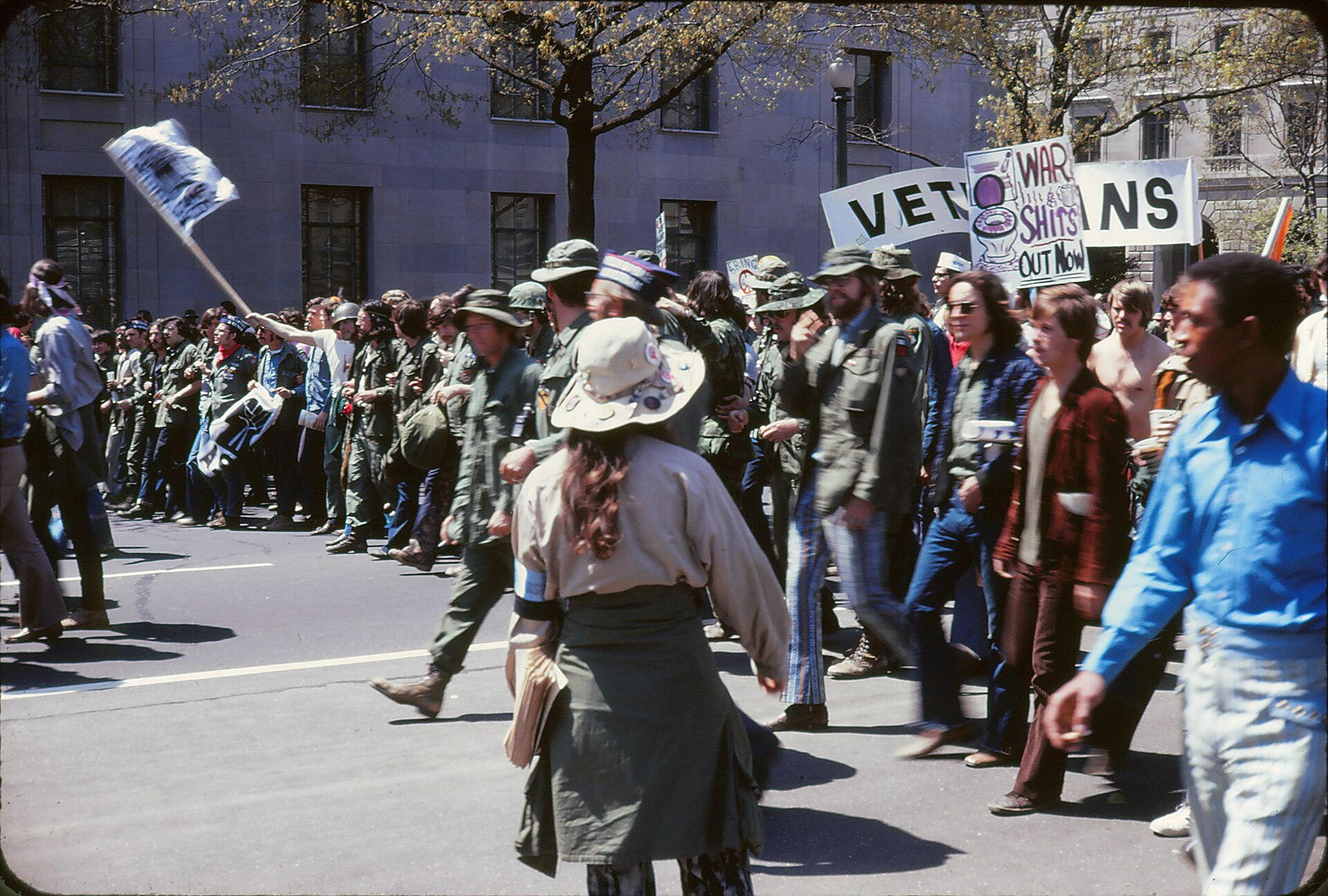
Vietnam War Protests in Washington D.C. in 1971
The opportunity to explore underrepresented voices from the Vietnam War thanks to the celebration of such a notable anniversary, the 50th anniversary of the reunification of Vietnam, has undoubtedly for me, and hopefully for readers too, illuminated our understandings and perspectives of the intricate cultural and social issues present during the conflict. For the most part, African-American reactions to the Fall of Saigon and My Lai Massacre reveal a complex mixture of disillusionment, critique, and unresolved tension. Rather than being characterised by a stereotypically jubilant finale for one side and a crushing defeat for the other, the unclimactic end of the Vietnam War instead prompted reflection on its broader implications for race, justice, and identity. As demonstrated by this blog, there is often a treasure trove of lesser-known reactions which accompany historic tragedies; Bloods, Dien Cai Dau, and Madhubuti’s poetry all emphasise this fact. Here, we are shown that inequality persists, regardless of military rank, geographic proximity, or the war’s conclusion. Perhaps when dealing with institutionally entrenched racism, any delineating factor can become arbitrary.
[1] Terry, Bloods: Black Veterans of the Vietnam War: An Oral History, 1.
[2] “I used to think that I wasn’t affected by Vietnam, but I been livin’ with Vietnam ever since I left. You just can’t get rid of it. It’s like that painting of what Dali did of melting clocks. It’s a persistent memory. I remember most how hard it was to just shoot people”, Terry, Bloods, 14.
[3] Ibid., 290.
[4] Ibid., 199.
[5] Yusef Komunyakaa, “After the Fall” in Dien Cai Dau (Wesleyan University Press, 1988), 58.
[6] Hunt, The Turning: a history of Vietnam Veterans Against the War, 210-212.
No comments yet.